camelon, community, development, Our Place, resilience, Support, tamfourhill

THRIVE to Keep Well

Community Coach blog, Dan Rous, 3 June 2021

I am so pleased to be able to introduce an exciting programme that is new to Falkirk. We’re excited that NHS Forth Valley have come to us with the opportunity to pilot this programme that has run elsewhere but never before in Falkirk. So Camelon and Tamfourhill are ground breakers!

So “what is this programme” I hear you cry! Well, specifically this is for the ladies of Camelon and Tamfourhill. I realise that means I’ll lose half of the readers of this blog today and I’m sorry about that, but I’ll balance that back up at a later date. Guys, feel free to read on though as you may have a female in your life to whom this might be relevant so you can let them know.

So ladies, here’s a couple of questions for you, to see if you would be eligible for this programme.

  • Do you live in Camelon and Tamfourhill area?
  • Are you aged 16 upwards?
  • Do you find it difficult at times to deal with day to day stresses?
  • Are you looking for help to improve your confidence, motivation and/or self esteem?

If you can answer YES to those questions then this programme is potentially for you. If any of those do not apply to you then I’m sorry that the rest of this blog won’t be relevant for you. However, as for the guys, feel free to keep reading as you may know someone who would benefit and you could encourage them to get involved.

The programme is called THRIVE to Keep Well and each letter of the word THRIVE stands for another word. Each participant will have the opportunity to be Transformational in their journey to making positive Health and wellbeing changes, by being a Responsive Individual, to feeling Valued and Empowered by improving knowledge, skills and opportunities in a variety of ways to move towards a positive destination.
The programme is delivered over 16 weeks through one 4.5 hour session per week in a local Centre. The sessions run during the day in school hours. We have space for up to 12 participants so it will also be a great way of meeting some new friends.

The THRIVE to Keep Well programme will help you to:

  • Increase your knowledge and ability to manage day to day stress and anxiety.
  • Improve your self-esteem and confidence through self-development and reflection techniques.
  • Improve your knowledge and skills around motivational goal setting to enable a change in your health behaviour.
  • Increase your knowledge of your current health. (As part of the programme you can have a NHS Forth Valley Keep Well health assessment)
  • Increase your confidence and motivation to improve on your life skills, especially when looking towards further learning, volunteering and employment.
  • Increase your knowledge and develop skills and confidence that will improve family relationships, support your children’s learning, behaviour and attainment (if you are a parent), and enhance the wider wellbeing of you and your family.

Through the programme, participants will learn about stress, anxiety and how to make positive changes through a variety of group and self-reflection activities. Participants also take part in relaxation, creative, health, safety, and community awareness sessions. There will also be a chance to meet with training and employability support providers.

It’s a bit of fun but is also a seriously helpful programme that has benefited so many people to better understand themselves and to progress in life, including moving on to training, volunteering or even a paid job. What’s more, it’s all FREE, plus all resources, drinks, snacks and lunch are included.

So here’s the detail:

  • The programme starts at the end of August (Preliminary session Friday 20, then Wednesdays from 26 August)
  • Sessions happen once a week for 16 weeks (breaking for the October school holiday).
  • Sessions commence at 9:30/10am and finish at 2:30pm, so if you have children at school there’s time to drop them off and pick them up and still benefit from the programme.
  • This pilot is just for females in the local area aged 16+
  • Most sessions will be at Tamfourhill Community Hub but some will be at Camelon Community Centre.

If you would like further information, you can get in touch with me (Dan Rous, Community Coach) on 07444 873151 or communitycoach@tamfourhilltro.co.uk or better still, you can contact Jackie Turnbull, who is the NHS Keep Well Forth Valley coordinator and is also local! Jackie is on 07909 002795 or jackie.turnbull@nhs.scot. If you’re linked with a support worker, they may speak to you about referring you to this programme as we have also contacted local agencies and schools about this.

If you would like to support the development of this programme in the local area so we can run it for more groups, male and female, in the future, or if you want to get involved in any way with any of the craft, food, pamper or other elements, then please get in touch with me as well.

So, over to you. Have a think if you would benefit from this, or if you know someone close to you who would. We’re really looking forward to bringing this programme to you this Autumn.

Until next time…..
camelon, community, Our Place, Support, tamfourhill

Be more human

Community Coach Blog, Dan Rous, 20 May 2021

Allow me to introduce you to the movement that is … Camerados. Being a Camerado basically means to look out for each other and, as the title of this blog suggests, to be more human.

So why am I telling you about this movement? Well, basically because here at OPCT HQ we have joined up with them (for free) on your behalf, to gain ideas, resources and support that will help us grow even more as a strong united community. (Have a look at their website for yourself if you want!)

Already we do pretty well at this strong community stuff across Camelon and Tamfourhill but there are always opportunities to do more, to grow more, to be more, well, human! You see, so often, as we live stressed and struggling lifestyles, relying on overstretched and underfunded services, the answer to our problems could lie right here in our community – with each other.

The official blurb says that “Being a Camerado is about recognising we’re all going through stuff and that it’s ok to be a bit rubbish sometimes… but that tough times get easier when you’re alongside, not being fixed or fixing, but having a laugh, mucking in, putting the kettle on and looking out for each other. Why? Because when we look out for each other we get the two essentials that make life worth living: friends and purpose.”

Regular readers who pay attention to this blog will recognise a word in there that I use a lot – alongside. That’s the key in my eyes. To stop doing things for or to people because we think it’s right, and to start coming alongside people and doing things with them. And do you know what? The other person might even be able to help you!

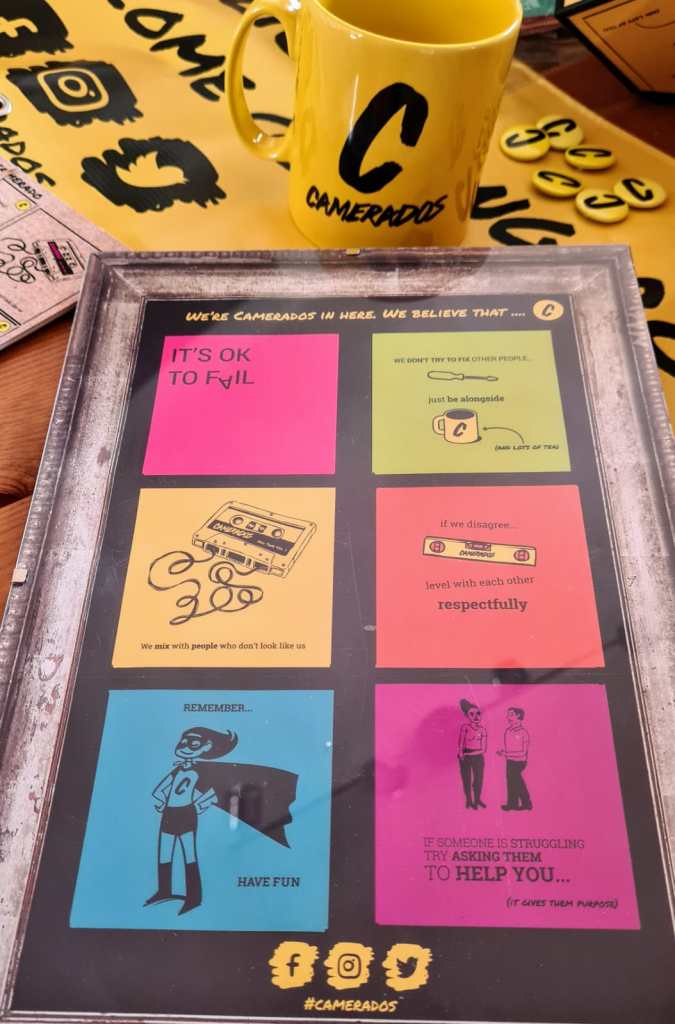
Camerados operate through 6 principles as shown in the image below but I’ll explain them too:

  1. It’s ok to fail. And thank goodness for that! We don’t have to get things right all the time – just as long as we learn and try not to make the same mistake again. It’s okay to try something out and for it not to work – at least you tried when many might not even have bothered starting.
  2. We don’t try to fix other people. Just be alongside them. There it is again – alongside! But the fixing thing is important to flag up. I love to help people reach their inner potential. To help them achieve what they were designed to achieve. But in my heart, I am a fixer. Show me a problem and I’ll find a solution. That’s fine in a lot of settings and has served me well in project development work over the years. But here, the biggest challenge for me in this job is to help people to develop – not to develop the people. That’s where our impaCT coaching programme comes in too. Helping people to ask the right questions and come up with the answers they need to move forwards. And training for this has helped me as well! So I’m here to help people – yes, you – to find their own fixes in life – and, as the graphic above says, to have lots of tea too (am I allowed to add cake or at least a biscuit onto that as well?)
  3. We mix with people who don’t look like us. This is not just about race or religion but even people who have a different outlook on life – a different career path – different tastes. As an Englishman who supports Spurs, I’m used to being different! But I live in Camelon and have mixed with many people over the last nearly 5 years, who you wouldn’t normally think would mix with the likes of me. Yes there’s a light hearted element to those last 2 sentences but this is equally a serious point. We are a strong community but a community that has changed a lot over the years and is now proudly multi-cultural. Let’s embrace difference more and really celebrate community.
  4. Remember – have fun! I often get accused of being a bit frivolous in life. I like a laugh and a joke even if my kids despair at most of my jokes (don’t they realise that just makes me tell them more!) But that is not to say that I don’t put in a hard slog, get stressed out, lose the plot and other things like that. But at the heart of everything we do, we need to keep returning to this principle – a lot.
  5. If we disagree, level with other respectfully. Similar to principle 3, we’re all different – but that’s ok. We will have different opinions and views on things – but that’s ok. The trick is to disagree respectfully. Just because you don’t like something doesn’t mean everyone else is wrong – nor does it mean you’re wrong and they’re right. But speaking with people – attempting to see the other side of the story – not necessarily agreeing but accepting – these are such important things to take on board. Having a rant on social media is so easy – probably too easy. You can even do it behind a veil of anonymity if you choose. And then it’s very easy to respond and how many posts have we seen with dozens of comments ranting and raving at each other. Stop. Take a breath. Try to engage respectfully. And if that’s not an option because the other person is just looking for an argument – well it’s also okay to say nothing sometimes.
  6. If someone is struggling try asking them to help you…it gives them purpose. I love this so much. It goes back to the not-fixing principle. This is so rarely thought of as an option but the thing you ask that person to help you with could be the one thing that stops them from going down a really bad path that day. You’re not fixing them. You’re giving them a task to do which in turn, will help them think differently about themselves.

How good are those principles? None of this is rocket science as they say. But how often do we miss out on these simple truths in life – and what a difference it would make if we all tried to live by these.

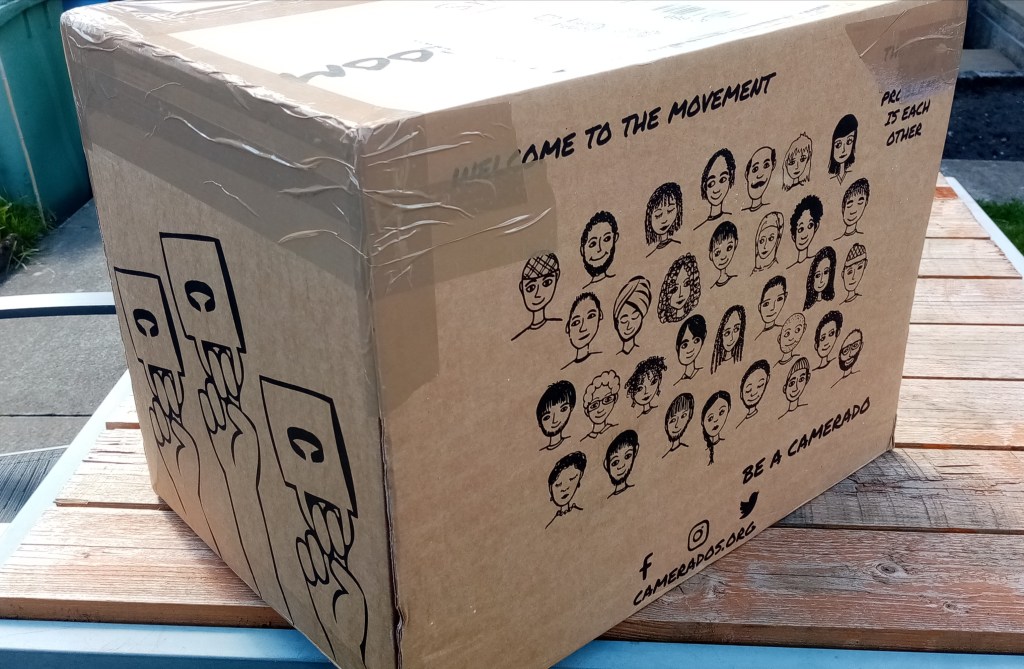
Yesterday, I posted this picture on twitter, saying I was excited to see what was inside. I added #publiclivingroom, #beacamerado and #watchthisspace to the tweet.

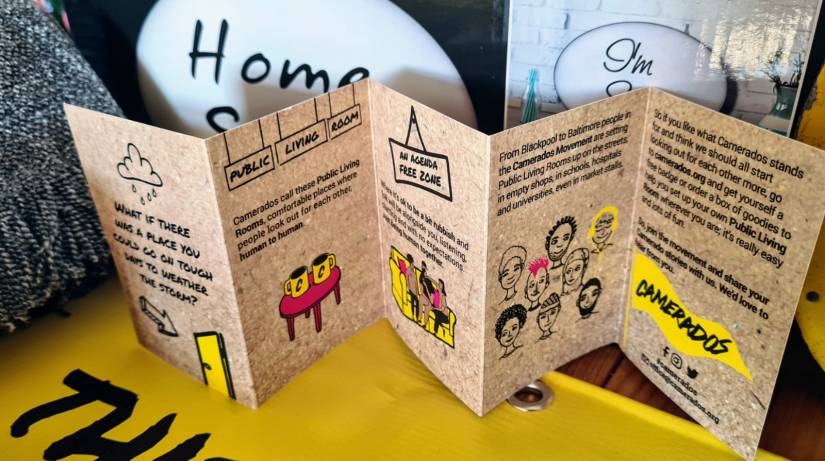
So, this is the space you’ve been watching! Why was I excited? Well partly because I’m a bit sad, but mainly because this was our free Public Living Room kit. “What’s a Public Living Room, Dan” I hear you shout. I’m glad you asked! (Is anyone actually still reading this?!) Well, to return to the official Camerados blurb, “What if there was a place you could go on tough days to weather the storm? We call these Public Living Rooms, comfortable places where people look out for each other, human to human. Where it’s okay to be a bit rubbish and folks will be alongside you, listening, chatting and with no expectations.” How amazing does that sound?

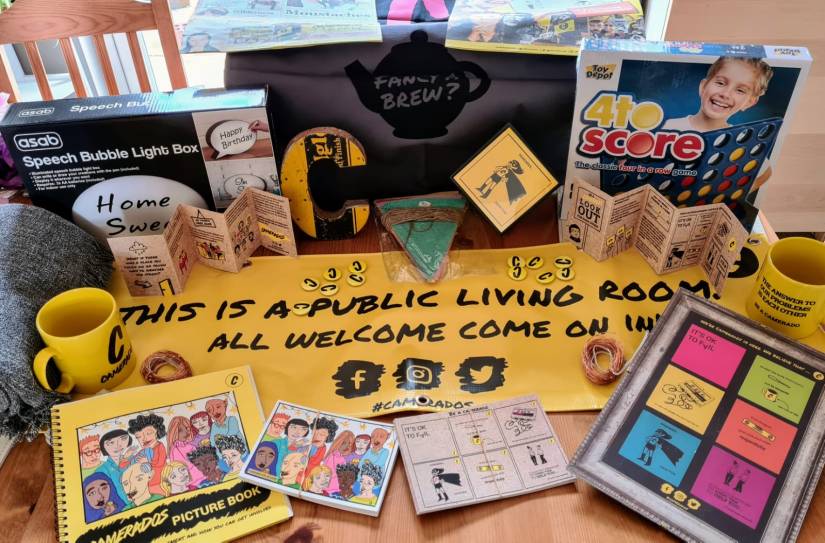
So what’s inside the box I hear you ask (that’s good – you are still there!) Have a look at the images below (they’ll go bigger if you click on them) then I’ll explain a bit more:

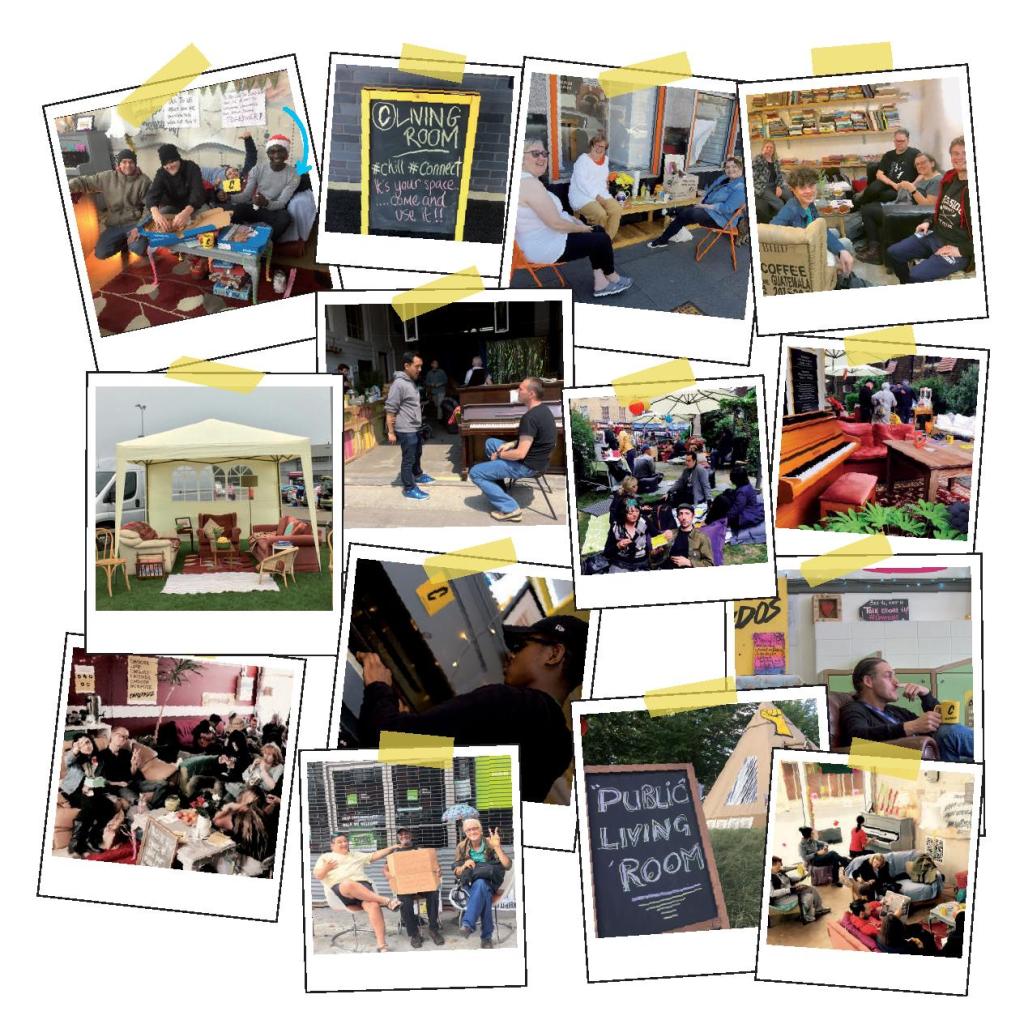
Games, decorations, flyers, cards, badges, stickers, cushion covers, throws, mugs. A fantastic mix of resources to help us (I mean you!) to set up a Public Living Room. And here’s a few images of what a room could look like:

But what is so special about these public living rooms? Aren’t they just another café? Well basically yes apart from these are usually free. They’re a place to gather, chat, drink tea and eat biscuits. But more than that, they’re a place to be more human. If you’re in any doubt, have a read of this account from a Public Living Room down south that even explains why there’s a Connect 4 game in the box:

Right beside our Public Living Room was a mental health drop-in centre. We met lots of people who were visiting it. If your life consists of short appointments what do you do the rest of the time? One half hour appointment about deeply challenging issues then leaves you 23 and a half hours of that day to walk around with nothing to do but worry before or after that appointment. There was a little fella who looked like McKenzie Crook of The Detectorists, dressed in a cagoule and jogging pants with a strangely expressionless face and he said to us: “I was wandering up this street looking for somewhere to kill myself today, but then I came in here and played Connect 4 with people, had a cuppa and a few custard creams. It was nice. Don’t think I’m gonna go through with it today.” Connect 4 made a difference that day.

Wow. Just wow. Never underestimate the power of the simple things. Tea. Custard Creams. Connect 4. A friendly face. These things that cost next to nothing, actually saved someone’s life.

So let’s work on this together shall we? Alongside each other? Where would you like to see a public living room set up in this community? Indoors or outdoors? Where can we best be of help to you to make that happen? Why not message us today so we can resource you as needed.

Dan Rous, 07444 873151 communitycoach@tamfourhilltro.co.uk

Until next time….

camelon, community, gardening, growing, Our Place, Support, tamfourhill

Community Growing Update

Community Coach Blog, Dan Rous, 13 May 2021

For this week’s blog, I’d like to take the opportunity to bring you an update on our Community Growing group with some of the activity that has been happening, and what’s ahead – including (as you would expect) how you can get involved.

Community Tool Sheds
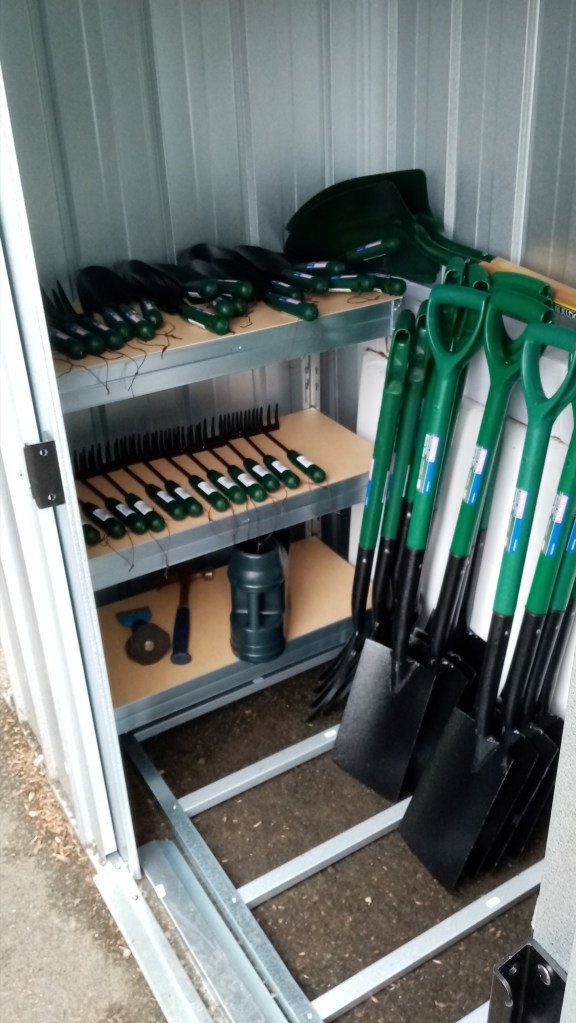
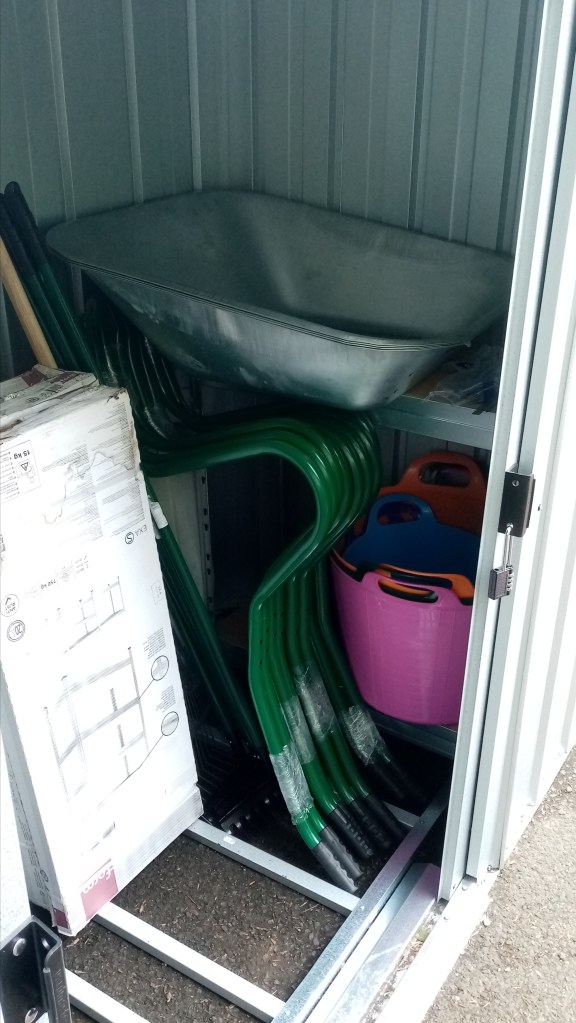
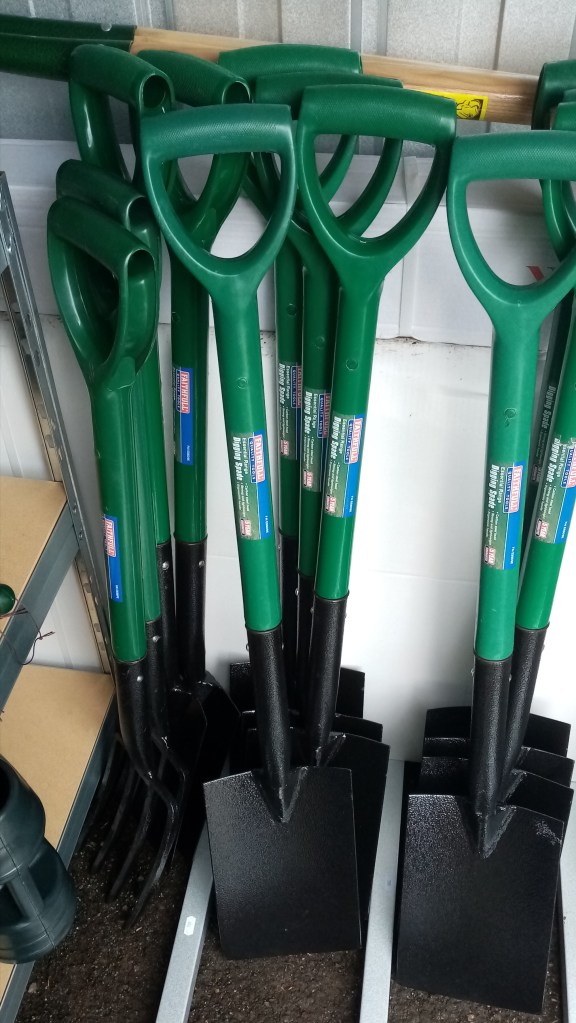
Earlier this year, we were successful in securing funding from the Community Climate Action Fund to purchase and equip 2 community tool sheds. We have now put one of these into place at Tamfourhill Community Hub, and the other will be going into a location in the Camelon area shortly. A couple of volunteers helped build the first shed – complete with around 200 tiny screws and washers, and although there’s a bit of internal work to do and a few tools on back order, this is now operational. Here’s some pictures of the shed and if you need access for anything, please get in touch for the padlock code. Also, if anyone has some chipboard or equivalent that would cover the floor area (900mm x 2100mm), I would love to hear from you. Contact details are below.

Tamfourhill Community Hub
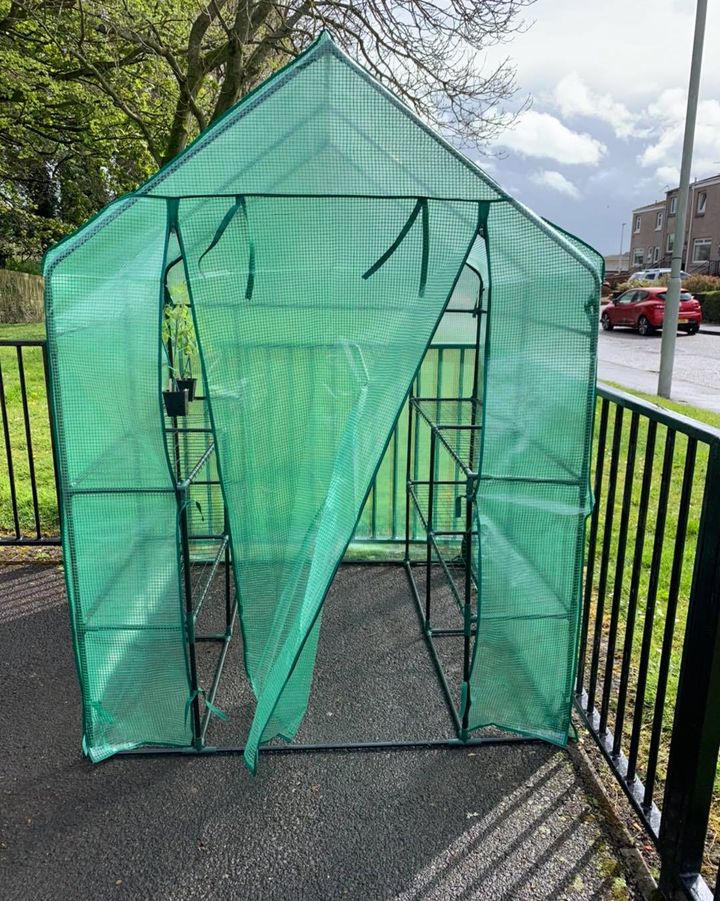
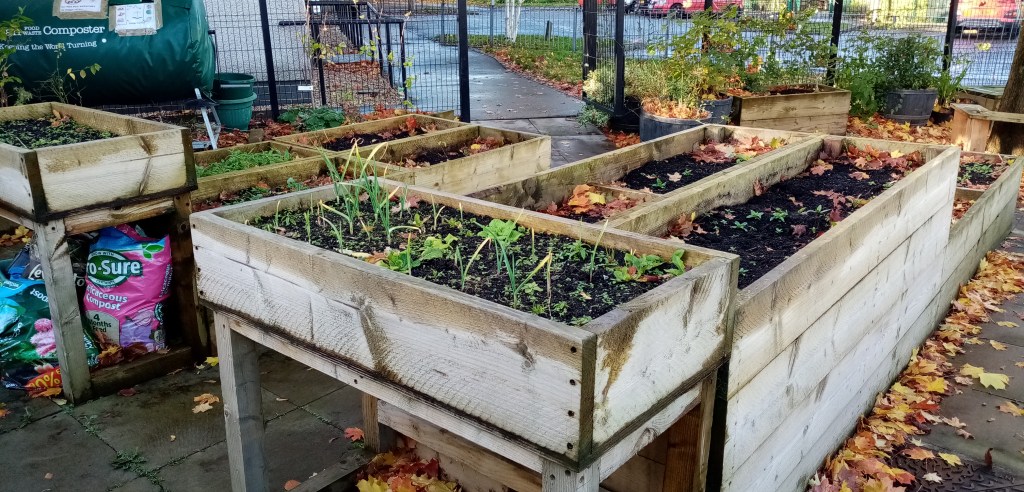
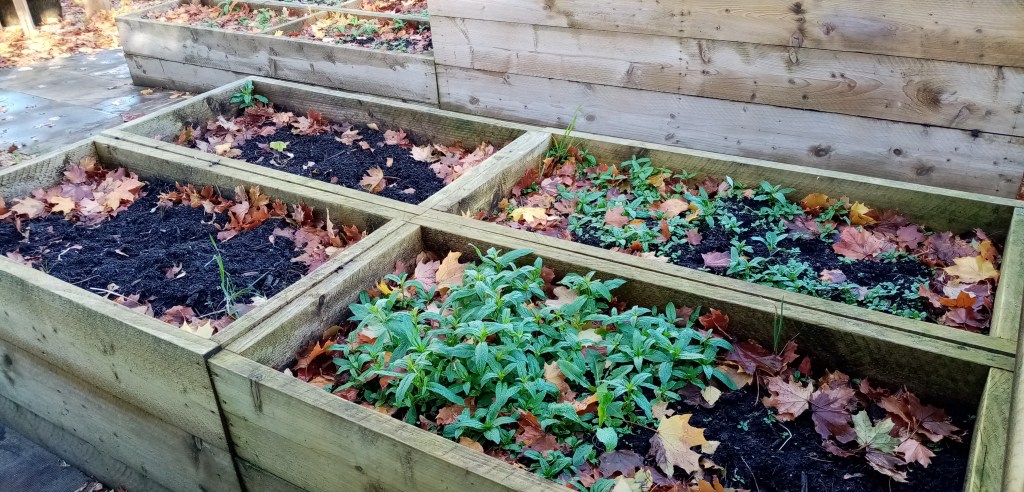
Some growing activity has begun in raised beds outside Tamfourhill Community Hub, and they’ve also got a potting shed and greenhouse in place now. Donations of veg plants have been received and planted, plus various plans are being made. There are a few volunteers involved already but there is always room for more. They are having a growing session for adults on Wednesday 19 May from 10am to 12pm. They have various thoughts and will be looking at many different options. Obviously restrictions apply, so if you would like to go along then please email Thillcentre@live.co.uk

Forth Valley Sensory Centre Kitchen Garden
One of the Community Growing Group volunteers – Nicholla – has been putting in a power of work sorting out the various raised beds in the Kitchen Garden at this fantastic local resource. She has worked with groups from Windsor Park and Carmuirs Primary and they, together with the team at the Sensory Centre, are immensely grateful for the support from Nicholla and the wider OPCT team. This is the beginning of a fantastic partnership.  We’ve been able to supply compost, plus thanks to the generous help of the a local Garden Centre (who have waived any publicity), we also supplied some seed potatoes.  We look forward to tasting the fruits of their labours in the Centre’s café in due course!

Brown Street Park
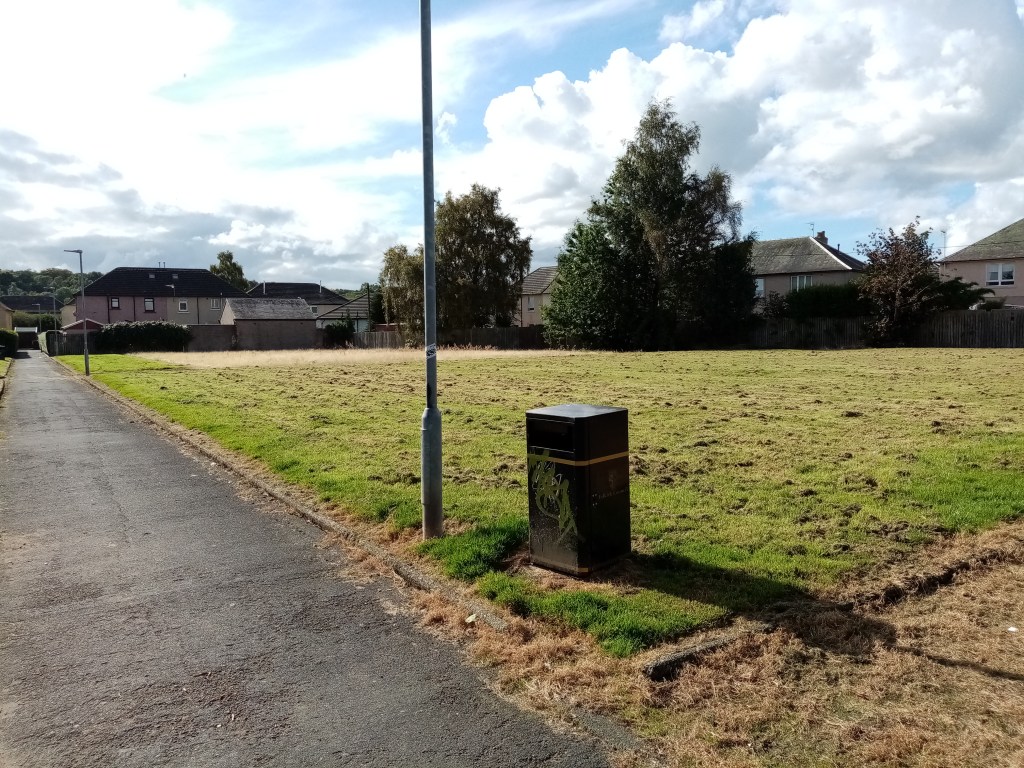
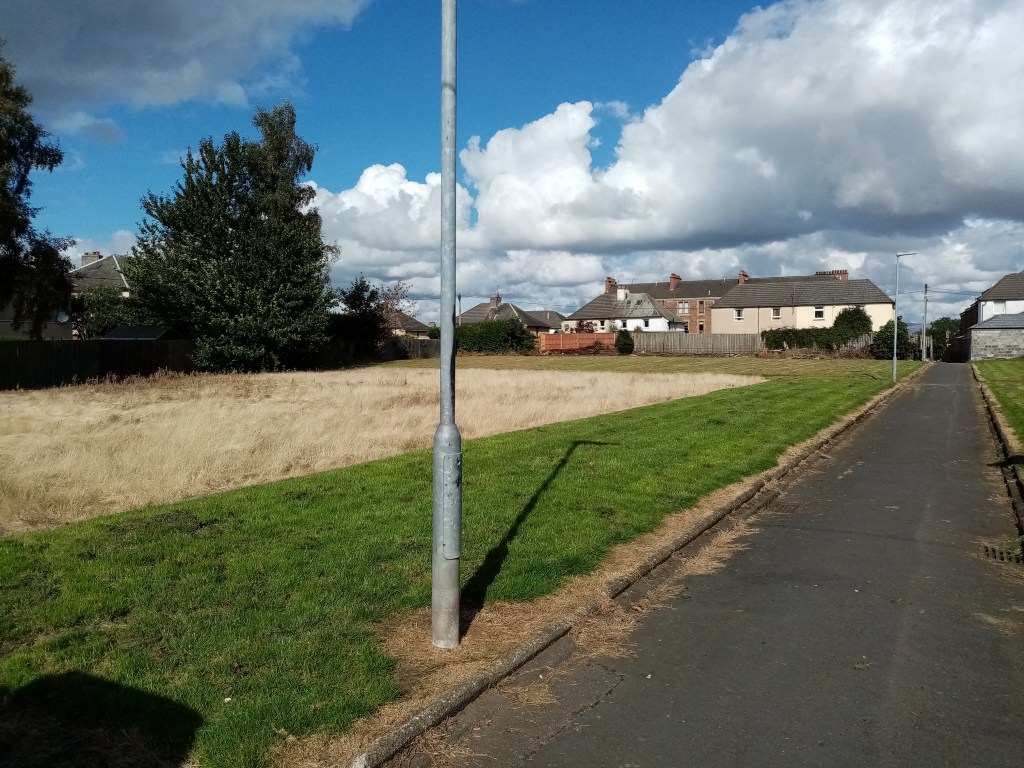
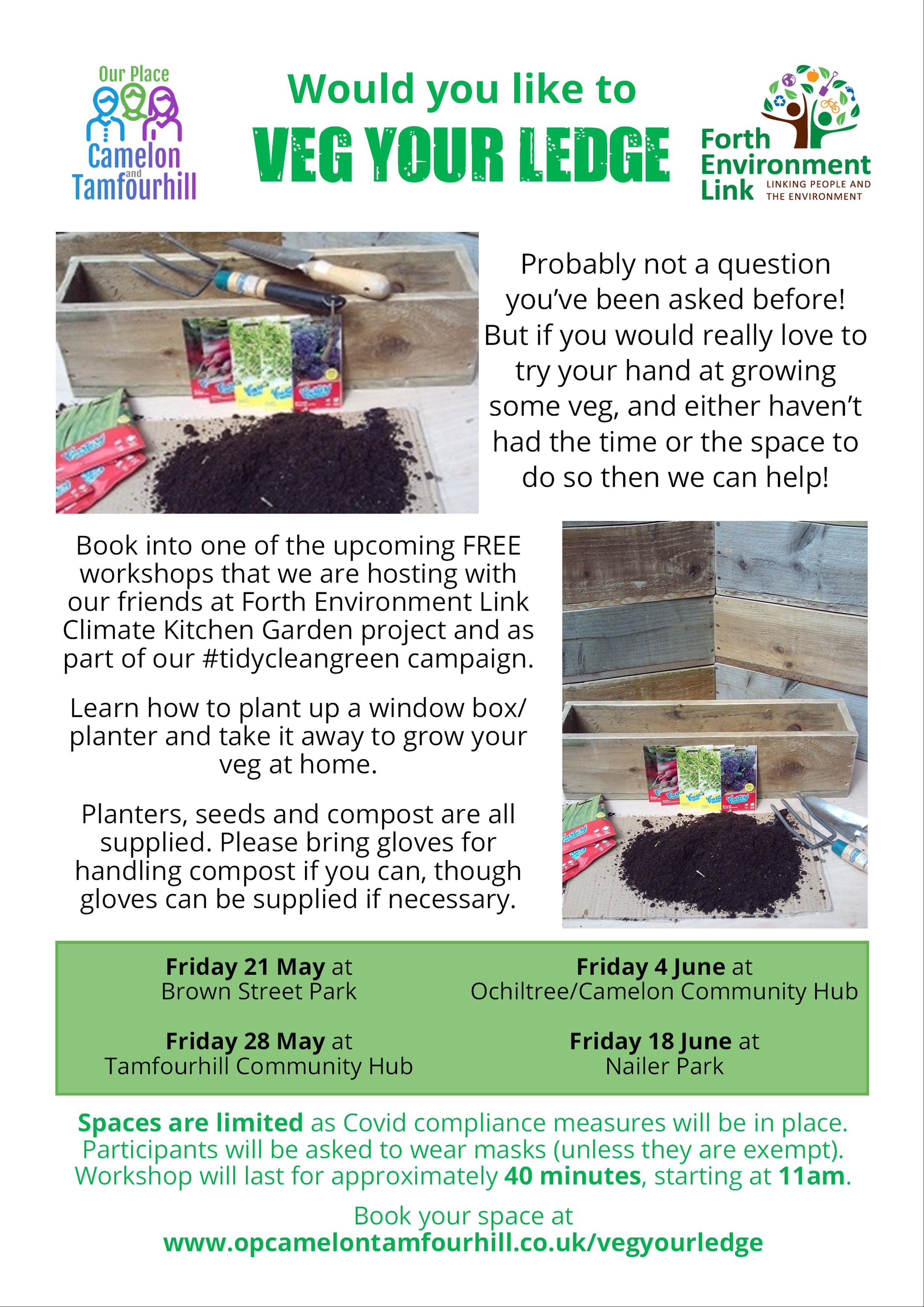
Following suggestions from some residents, we conducted a consultation of 175 properties in the area surrounding Brown Street Park to see what the feelings where about developing this long abandoned space into a community growing space. We’ve had some really positive feedback (87% of responses) but also a few negative comments, so we will be making further investigations about what could be done here. To help with this, on Friday 21 May there will be a bit of activity in the Park. We will be hosting the first of 4 “Veg Your Ledge” workshops with Forth Environment Link at 11am – spaces are limited so get in quick! While that’s happening, there will be a litter pick to tidy up the park and myself and my colleague John Hosie (Community Safety) will be on hand to chat to people about their concerns and suggestions for the park and the surrounding area, plus we’ll have some specific information and resources for dog owners. All being well, our Community Police officers will be with us as well. Come along – we might even have biscuits!

Veg Your Ledge Workshops
As mentioned in the previous section, we’re hosting some Veg Your Ledge workshops with Forth Environment Link. Spaces are filling up but there’s still some available, so head to the booking page to get yourself checked in.

Joining the Group
If you’d like to get involved with Community Growing in Camelon and Tamfourhill, why not join our group. We plan to make this a formal group very soon so will need to form a small management committee that will then be able to go after funding for growing projects. However, don’t let that put you off joining as I’ll be providing full support and if all you want to do is grow stuff, then that is absolutely fine! If you’re interested, please complete this survey to log your details onto the group system and I’ll be in touch.

All of this is a key part of the new Community Safety Strategy that John has pulled together with your input, and forms an important part of the #tidycleangreen campaign as well. We have big ideas for what could happen including some more links with other local organisations, and would love as many people to be involved in this as possible – at whatever level you wish to be. Who knows – Camelon and Tamfourhill in Bloom could be a thing again!

Until next time…

Dan Rous,
Community Coach,
communitycoach@tamfourhilltro.co.uk
07444 873151

camelon, coach, community, development, Our Place, Support, tamfourhill

Coaching 1 to 1

Community Coach Blog, Dan Rous, 29 April 2021

At our First Anniversary Celebration event on Monday, I officially launched a 1 to 1 coaching programme that is FREE for you, the lovely people of Camelon and Tamfourhill. This is not sports coaching, but personal development coaching to help you, the coachee, to fully live out your potential – whether that is personal or professional. The goal of coaching is for the coachee to discover insights about themselves, and to take action in reshaping their life.

The video below is my talk from the event where I explain what Coaching is and crucially, what coaching isn’t. This can really make a difference in your life and help you move into the potential that is within you – no matter what stage you’re at.

If you don’t fancy watching the video, then you can read things for yourself below that. Once you’ve watched or read, if you want to book in for a series of coaching sessions with me, or to find out more for yourself or someone you’d like to refer, then please email me at communitycoach@tamfourhilltro.co.uk and we’ll have a conversation. There’s also more information over at our dedicated 1 to 1 Coaching page.

What is 1 to 1 Coaching?

Coaching is an ongoing conversation that empowers a person to fully live out their potential – both personal and professional. The goal of coaching is for the coachee to discover insights about themselves, and to take action in reshaping their life.

The coaching relationship is expected to encourage insights, to facilitate greater personal awareness, to change behaviours, to initiate actions and, ultimately, to produce outcomes that satisfy the coachee.  Much is expected of them: it is their responsibility to imagine, reason, identify, plan, decide, and implement their goals.

What Coaching Is

Coaching is about the coachee – their goals, their learning, and their growth. Together, coach and coachee will discover the potential within them.

Coaching is about learning – rather than teaching. The coachee is the expert on their life. A coach uses coaching techniques such as deep listening, open questions, encouragement, feedback, and always remaining supportive.  The focus is on assisting the coachee in discovering insights and taking next steps in pursuing their calling.

Coaching is about action – the coachees action. Each session the coachee will determine 1-3 actions steps to take before the next session. It may be surprising how quickly the coachee will progress toward their goals.

Coaching is about all of the coachee – not just work or personal life.  We all know that altering old habits and thought patterns is difficult. A coach recognises these patterns and will support the coachee as they change and grow.

What Coaching Isn’t

It is not therapy.  Although many of the communication techniques are the same, like active listening, reflecting, use of questions, limited advice giving, etc., therapy focuses on the past to bring healing and unblock a person so they might move ahead. Coaching is future and action-oriented – for people who are basically free of debilitating psychological or emotional issues.

It is not mentoring. Mentors are experts in a particular field who seek to pass on their expertise to a person. Mentors provide knowledge, advice, guidance, correction, and encouragement to people who are newer and junior—by experience if not by position or age. Mentors usually play the roles of advisor and teacher to guide and impart knowledge and wisdom.

It is not training. In training, the trainer sets the agenda. Changes are imposed from outside the participant, via the trainer. In coaching, the coachee sets the agenda. Coaches use adult learning principles of self-discovery to motivate change from within their coachee.

It is not authoritarian. Did you have a tough sports coach who used to yell at you and make you do a million push-ups if you made a mistake? That’s not coaching. A coach will push a coachee beyond what they might think they can do, but will always be supportive. The coachee is in control. The desire and responsibility to choose and act belongs to the coachee – and them alone.

Why Does Coaching Work?

Coaching works because it brings out the best in the coachee; a coach believes that coachees can create their own best answers and is trained to support them in that process. During coaching sessions, a coach will:

  • Listen. The coachees story is central. A coach is fully engaged in what they are saying, encouraging them to discover what their potential is.
  • Ask questions. A coach uses questions to stimulate the coachees thinking and creativity. Questions are about possibilities and the future.
  • Encourage. Everyone needs encouragements, and usually we don’t get enough. A coach will hold and honour their coachees vision, progress, and efforts.
  • Facilitate while letting you lead. A coach facilitates learning and problem solving.

A coach is not in charge, nor do they set the agenda.  A coach is simply here to help the coachee to engineer their future.

Why Use a Coach?

The reasons people want coaching are endless, and as unique as the person. Here are a few examples that motivate people to use a coach.

  • To make significant life changes
  • To make better decisions
  • To set better goals and reach them faster
  • To address changes in location or employment
  • To reduce stress, isolation, or uncertainty
  • To progress personally
  • To improve your relationships
  • To make a bigger impact on the world
  • To be a better leader
  • To better understand who you are
  • To simplify or prioritize your life
  • To evaluate your pace of life

Our Coaching approach

  1. Leverages Strengths
  2. Provides Clarity and Focus
  3. Instils Confidence
  4. Catapults Learning
  5. Fosters Intentional Progress
  6. Rubs Off on Others
  7. Encourages achievable Goals/Dreams

You will never maximize your potential in any area without coaching. It is impossible. You may be good. You may even be better than everyone else. But without outside input you will never be as good as you could be.

Andy Stanley, The Next Generation Leader

So, does this sound like it could be of help to you or someone you know/work with? Then get in touch and let’s get started! Drop me an email at communitycoach@tamfourhilltro.co.uk to start the process.

Until next time…

camelon, coach, community, development, Our Place, resilience, safety, Support, tamfourhill, training

Friday Feature – Let’s Celebrate

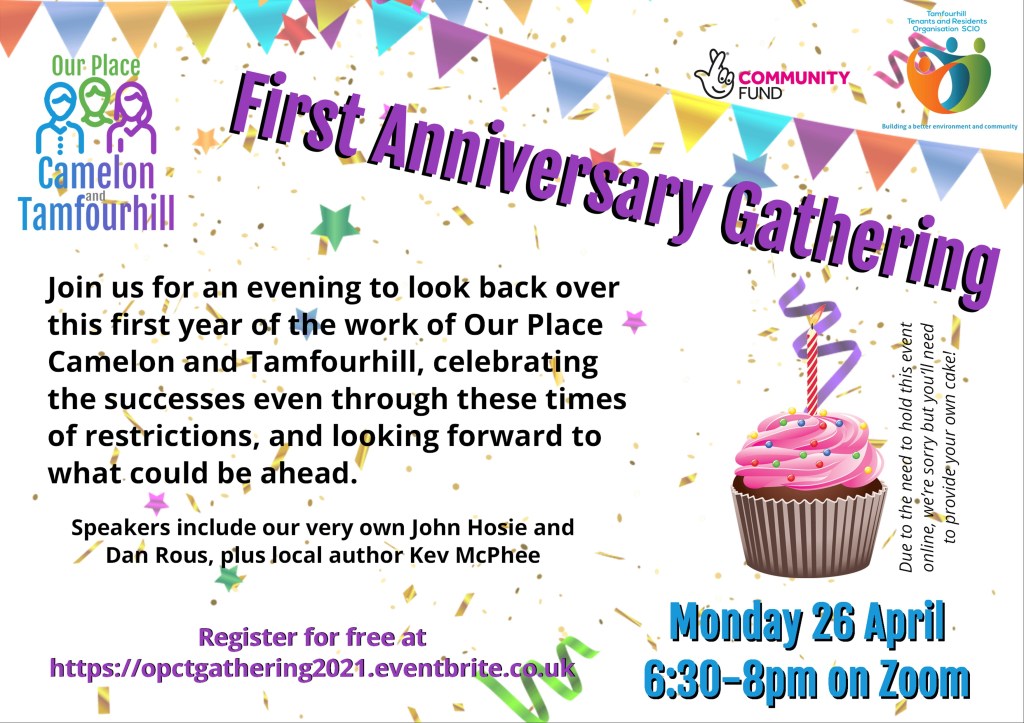
This is a reminder that on Monday next week (26th) we will be gathering on zoom at 6:30pm to celebrate the First Anniversary of Our Place Camelon and Tamfourhill.

Despite not being the first year any of us would have planned, our team have still managed to achieve great things with you in the community and are well set for so much more in year 2 and beyond.

We’re just sorry that restrictions don’t allow us to do this in person – hopefully next year! So for now, head over to Eventbrite (link below) to register your free place so you get the link, then on Monday evening, bring your own cake and join in the celebrations.

As well as reviewing what has happened so far, John will be speaking about the Community Safety Strategy and Dan will be speaking about our Development Coaching programme. Plus we’ll hear from local author Kev McPhee and others about some great opportunities for you in Camelon and Tamfourhill including how you can get involved and shape the way forward.

So please join us if you can. The link to register is https://opctgathering2021.eventbrite.co.uk

camelon, coach, community, development, Our Place, resilience, Support, tamfourhill

Keep the main thing the main thing

Community Coach Blog, Dan Rous, 22 April 2021

As we begin to move towards more things opening up and less restrictions, this is a good time to take a look at why you do what you do. Whether you’re doing something in the community, or have been in a job for years, or are just starting out with something – knowing why you do it is crucial to your success and, more importantly, your inner happiness.

Way back in July of last year I wrote a blog entitled Why, How, What, that referred to the order you should plan anything. Always start with why you want to do something and only consider how you’ll go about it and even what you will do once the main purpose – the why – is set in your mind.

It’s a revolutionary mindset that isn’t really rocket science, but is something that Simon Sinek pioneered back in 2006 after a period of not just dissatisfaction in his work but an inability to even do what he was meant to be doing. He’d lost sight of his ‘why’. Once he found it, his life turned around completely. His passion was restored. His productivity increased. He was a happier person. Have a quick watch of this video in which Sinek explains more about this as part of the 10th anniversary of ‘Start with Why’.

So what about you? How are you feeling about whatever it is you are doing? If you’re responsible for something that is only just about to reopen after lockdown, do you still believe in why you’re doing it? Can you even remember what the ‘why’ is? I was recently chatting to a friend who has just left the corporate world and managed to enjoy the Easter break with her family before starting out in a new community focused role afterwards. She is enjoying her life again because she’s fulfilling her ‘why’.

Now, let me be very clear that this blog is not an instruction to just go and change what you’re doing! You may be living and working right at the heart of what you were put on this earth to do. You are living the ‘why’. If that’s you – allow me to celebrate with you. But if you feel a niggle inside you. If you struggle to get going with whatever it is you are doing. If you just feel there’s something else you’re meant to be doing, my advice is to look into that more. Don’t make any rash decisions. Think this through properly. Research things. Speak to your family and your close friends – those people who really know you. Really dig into the thing that makes your heart skip a beat.

If it will help, I can offer you some coaching sessions that will guide you to be able to come up with the answers within you. If that would be of interest, then please give me a shout at communitycoach@tamfourhilltro.co.uk or 07444 873151.

Finding your ‘why’ and living it out is the most liberating thing you can do in your life. I look forward to hearing your stories about this in the future.

Until next time……

camelon, coach, community, Our Place, resilience, Support, tamfourhill

Slow down to go faster

From the many things we have learned or developed over this last year of restrictions, the gift of extra time is high up on many peoples list. A few friends of mine normally had a 60-90 commute to work each way – so they’ve gained up to 3 hours a day. What an amazing gift! The trick of course, is what to do with that time. Many have taken up a new skill or started a new exercise regime (whatever that is!). Others have been able to spend much more valuable time with their family. But come on, hands up who vowed a year ago to learn a new skill or start something new, but all they’ve developed is a working knowledge of NetFlix?!

So, as restrictions start to be lifted, that extra time may still be there so what are you going to do with it? How are you going to manage it? Or if you’re going to lose some of that time for reasons beyond your control, how can you still remain as productive and chilled as before but without moving towards burnout? The answer – slow down to go faster!

That may sound weird but stick with me.

Ever heard the phrase ‘slow and steady wins the race’? And any Top Gear fans will know that part of the trick of getting a top time on ‘the lap’ is often to take some of the corners slower and more controlled. It’s not about ‘pedal to the metal’ all the time. It’s about consciously slowing down. Let’s explore this a bit.

John Ortberg describes this idea as “cultivating patience by deliberately choosing to place ourselves in positions where we simply have to wait.”

So if you regularly say you haven’t got time, this quote seems to indicate that there’s a choice you can make to make that time and it usually comes by doing less but doing it better. Now before you lynch me – especially the parents reading this – I’m a parent too and I’m also good at taking extra stuff on. So I’m speaking as much to myself here! Lets learn and develop together!

John Mark Comer, in his book “The Ruthless Elimination of Hurry” lays out four practices for unhurrying your life, and one of those is the practice of Slowing. He explores ways of slowing down both mind and body. I get that. I’m pretty good at slowing my body down but my mind is constantly on the go and that can be just as tiring. So Comer lays out 20 ideas (stick with me – I’m just taking 12 of them) for slowing down your overall pace of life. Ironically, even though I’ve not taken all the ideas, I’m still going to race through them! I’ll give my thoughts around his headlines with a few quotes from him interspersed. The first few relate to something most of us do regularly – driving a car – but then we move on to life in general.

  • Drive the Speed Limit. Okay this is the law, but how many would say they might just see what they can get away with. Why do it? Forget the “instant gratification of a life of speed” and just slow down.
  • Get into the slow lane. (This will apply more from Friday when you’re allowed to go into other local authority areas!) Comer says “settle in. Feel the wheel, the road. Watch the scenery pass.” Use the time as a chance to practice slowing of your mind as well. It really works.
  • Come to a full stop at stop signs. Again, this is actually the law according to the Highway Code. But how hard is it to do this? You just keep on rolling a little until you can move on safely. There’s an in built desire to keep moving but even if you’re not driving, how about occasionally just coming to a complete stand still in whatever you’re doing. Intentionally.

So let’s move on from driving and take some other ideas:

  • Get in the longest checkout line at the supermarket. This will probably be an unpopular one and I know most supermarkets will open another till if the queue gets too long! It seems like wasting time on purpose doesn’t it. But this is why Comer does this: “It’s a way to slow down my life and deal with the hurry in my mind. It gives me a few minutes to come off the drug of speed. … And when I get up to the cashier … say hello, ask a few questions, and say thank you. (Rather than my default of paying for my items while texting with work, while podcasting via headphones, all the while treating the poor cashier like an ATM instead of a person.)” He suggests it’s wise to “regularly deny ourselves from getting what we want … that way when somebody else denies us from getting what we want, we don’t respond with anger”.
  • Turn your smartphone into a dumbphone. Now I can say I’ve done this. The simplest way to do it is to turn off all notifications except for calls and texts – even just allow texts from select people. You could go further and actually remove the apps from your phone if you want to go hardcore. But taking away the notifications stops you being a slave to your phone. You can choose when you’ll look at it. Choose when to go on social media. Choose when to respond to someone who doesn’t need an urgent response. Delete every app that you don’t need or doesn’t make your life a whole lot easier. Keep your home screen as free as possible. And here’s a powerful one: “Set your phone to grayscale mode. This does something neurobiologically that I’m not smart enough to explain, something to do with decreasing dopamine addiction. Google it!” Or better still, just get a basic phone – you know, the ones that just phone and text and might have the snake game on it. It’s about taking away things that could drain your time unnecessarily.
  • Parent your phone; put it to bed before you and make it sleep in. Comer and his wife put their phones ‘to bed’ at the same time as their kids: 8:30pm. He says “we literally set them to airplane mode and put them in a drawer in the kitchen. Otherwise we burn time and end up frying our brains with blue screens rather than winding down for bed.” But how will you discuss things on social media about the latest episode of Line of Duty? Here’s a thought – do it tomorrow! Maybe even just give someone a call to discuss it?
  • Keep your phone off until later in the morning. Comer says “The stats are ominous. 75% of people sleep next to their phones and 90% of us check our phones immediately upon waking. I can’t think of a worse way to start the day than a text from work, a glance at an email, a quick (sure…) scroll through social media and a news alert about that day’s outrage. That is a surefire recipe for anger, not love. Misery, not joy. And definitely not peace.”

We’ll take a pause here to point out that “none of this is legalistic. These ideas are simply self-imposed guardrails to keep the trajectory of my life between the lines and on the way to life”.

  • Set times for email. Pretty much every self-help writer, time management study, workplace efficiency expert etc all say the same thing. I struggle with this but am getting better. Listen, if something is that urgent the other person will phone you and you can answer calls. So don’t just glance at the emails when you get a free moment. Don’t answer randomly through the day. “Set a time to do email and stick to it”. The accountant for my previous job did exactly this and put it on her auto email response so you knew when you might expect a response from her. I know there have been times I’ll turn the emails off on the laptop so I can focus – especially when a deadline is looming! Most experts will recommend no more than twice a day for email. Comer points out “the more email you do, the more email you do“!
  • Set a time limit for social media. This is huge whether personally or professionally. How often have you opened the app and started scrolling and scrolling and scrolling. The next thing you know the programme you’d put on to watch has finished and you’re still scrolling. Comer says “it just eats up my time and with it, my joy”. Why not even set a daily allowance of social media time – there are apps to help you with that. If you can, why not even try coming off completely? If it wasn’t for a work need then I might consider that. Social media can be really helpful but it can also become a hotbed for negativity. It’s so easy to bang out a comment without really thinking and without facing much comeback on it. Things can grow arms and legs so quickly. For me, give me a proper conversation with someone – even if it is on Zoom – rather than just 280 characters in a tweet and then another one and another one.
  • Turn off your TV. “Even more than social media, TV consumes the lion share of our so-called free time. For the average person (note – this was written before lockdown!) that is up to 35 hours a week.” How much binge watching have you done on Netflix recently? It may not be something to be proud of when you look at what you could have been doing. Check this out: “when asked about the competition from Amazon Prime and other up-and-coming streaming services, Reed Hastings, CEO of Netflix, shrugged. He said their biggest competition is sleep”. Wow. That is what the world has become. Creating something that competes with sleep. And we wonder why we’re not as productive as we used to be.
  • Single-task. Now I’m a guy quoting from another guy. We all know the line that men can’t multi-task. I beg to differ having worked in catering for a while when I first moved to Scotland. But read this: “multi-tasking is just sleight of hand for switching back and forth between a lot of different tasks so I can do them all poorly instead of doing one well.” Or what about this: “multi-tasking is the drive to be more than we are, to control more than we do, to extend our power and our effectiveness. Such practice yields a divided self, with full attention given to nothing”. Ouch!
  • Walk slower. Unless you’re late for picking your kids up from school (go on – admit you were watching something on telly or you got lost in social media? See above….!) then just walk slower. You’ll still get to where you’re going. Now I’ve lived in London. I’ve worked in Edinburgh. You know the pace of people. I’ve even found myself clocking someone else going in the same direction and pretending I’m in a race with them to the next lamp post! Just me?! Comer says “One of the best ways to slow down your overall pace of life is to literally slow down your body. Force yourself to move through the world at a relaxed pace.”

As we’ve said, these are just some ideas. They might not all work for you. So why not come up with your own ideas as well. But don’t just come up with a list – actually put them into practice. To finish with a word from Comer “There’s more to life than an increase in speed. Life is right under our noses, waiting to be enjoyed.”

So if I don’t respond to you quickly. If I’m walking slowly. If I’m just that bit slower. Join me!

All quotes taken from John Mark Comer’s book The Ruthless Elimination of Hurry published by Hodder and Stoughton.

camelon, coach, community, development, leadership, Our Place, resilience, Support, tamfourhill, training

What do you see?

Community Coach Blog, Dan Rous, 8 April 2021

When you look at other people in the community – what do you see?

It may seem a strange question, but it’s an important part of community development especially when we take time to focus on the real assets around here – the people. We need to see past any initial reaction and purely focus on the person within. That can be hard especially when we look at the different types of people we might come across and the labels we may attach to them, even subconsciously. But it’s really important. Here’s some categories that came to my mind:

Life Labels

  • Youth; Criminal; Addict; Troublemaker; Helper; Retired; Active/Inactive; Unemployed; Student; Safe; Community Activist; Deaf/Blind.

Nationality Labels

  • Local (Kemlin); Incomer (New/Recent Resident); Refugee; Scottish; People of Colour; ‘Foreign’.

Language Labels

  • Local; National; International; BSL; Digital.

Do any of those ring true for you? You may have thought them but have you even said them? Or have they been said to or about you? Some may be said in jest but have you really meant any of them in a less than positive way? Don’t worry – I’m not asking for feedback here! These are all questions for you to think about yourself or to reflect on any things that may have been said to you.

Everyone of these labels that will have been applied to someone locally at one stage in their life can cause people to act and speak differently towards them. Whether positive or negative, they can create a stigma that usually is unhelpful. It can weigh that person down and not make them feel part of the community or alternatively, can create an elite kind of group. Either way it’s not great.

We all have a label that is much more positive to use – our name. It’s how we’ve been addressed since birth and is who we are. That’s not to say we are not any of the things listed above, but they do not define who we are. Every person – yes even you! – was born to change the world and deserves to be seen as the individual that they are. Every person has the right to achieve the potential they were put on this earth to achieve. Whether the time you’ve had up to this point has been positive or negative, it is never too late to achieve that potential – and to help others achieve theirs.

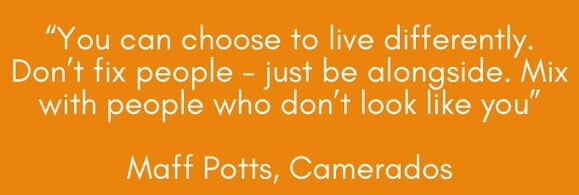
One further question for you. If you’re looking to support someone to move forward, to grow, to achieve their potential – how do you approach that? Essentially, do you see a person or a project? (Okay, sorry, that was actually two questions!) However positive you may have been about the labels we explored above, if you simply see them as a project you can ‘do’, then you might as well have been negative with those labels. Whoever they are – whatever the journey they need to go on – they are still a person. Our role in supporting them is to do just that – support them. Have a look at this quote from my friend Maff Potts, who heads up a fantastic organisation called Camerados.

This is a perfect summary of how I see my role. But to be honest – I do struggle with this because I’m a fixer! I love to sort things. But I have learned over the years – and especially over this last year – that this doesn’t really help – not in the situation we’re in just now. I came across the use of the word ‘alongsider’ last year and it’s perfect. I have worked in this way before and I do love it. It is perfect again for what I do and how I want to encourage you to do as well. Come alongside people – just as they are and as who they are. Step out among the people who you might not even naturally go towards. Hey, you might be pleasantly surprised. And next time you’re walking around the area, don’t just see things – observe. Truly look at what you see. Look beyond the labels and see the people that live here. Everyone has a part to play in the development of our community and I look forward to more opportunities to play my part.

Until next time….

Dan Rous, Community Coach, communitycoach@tamfourhilltro.co.uk, 07444 873151

camelon, coach, community, Our Place, resilience, Support, tamfourhill

Be the Fool

Community Coach Blog, Dan Rous, 1 April 2021

So today is April Fools Day! But rather than actually do a joke blog post (I was really tempted!) I want to encourage you to be the fool! I don’t mean for you to mess about or cause trouble and neither am I being rude, but I want to encourage you to be the one who isn’t afraid to ask the stupid question that could actually help everyone else understand things better.

Let me ask you: Have you ever read something you didn’t really understand? Or been in a meeting when someone is saying something that is just noise to you? I’ll be honest and tell you that my hand is firmly up to both of those questions! Before I go on, and just for fun, have a look at this short video from the US SitCom ‘Friends’ where Joey experiences similar feelings….

Sound familiar?

Now whilst I am being truthful when I said my hand was up for the questions I posed earlier, I do know that occasionally I may write or say something that isn’t clearly understood. I try not to get too technical as, well let’s be honest, I don’t do technical! So I want to encourage you that if you read anything from any of us here at Our Place Camelon and Tamfourhill that you don’t fully understand, please ask! You asking the question may not only help you get clarity, but could help countless others as well. We’re more than happy to post something again with better explanations.

I often use videos from Simon Sinek in these blogs as he has such a great, down to earth, encouraging style. I’ve been reading and listening to him for ages. I return to him again this week as I came across this video earlier in the week and just had to use it. He’s taken my blog title a step further by saying – be the idiot! Now we don’t allow that word in my house but I’ll allow it here for artisic purposes! But his point emphasises what I’ve been going on about today. Please don’t be afraid to be the one who speaks up and asks the question that maybe others were thinking. It’s the only way we’ll all grow and learn together. It’s the only way to be in life.

Until next time! Go on – be the fool! You don’t know how valuable that could be!

Dan Rous, Community Coach. communitycoach@tamfourhilltro.co.uk 07444 873151

camelon, coach, community, Our Place, resilience, Support, tamfourhill

What does ‘success’ mean to you?

Community Coach Blog, Dan Rous, 25 March 2021

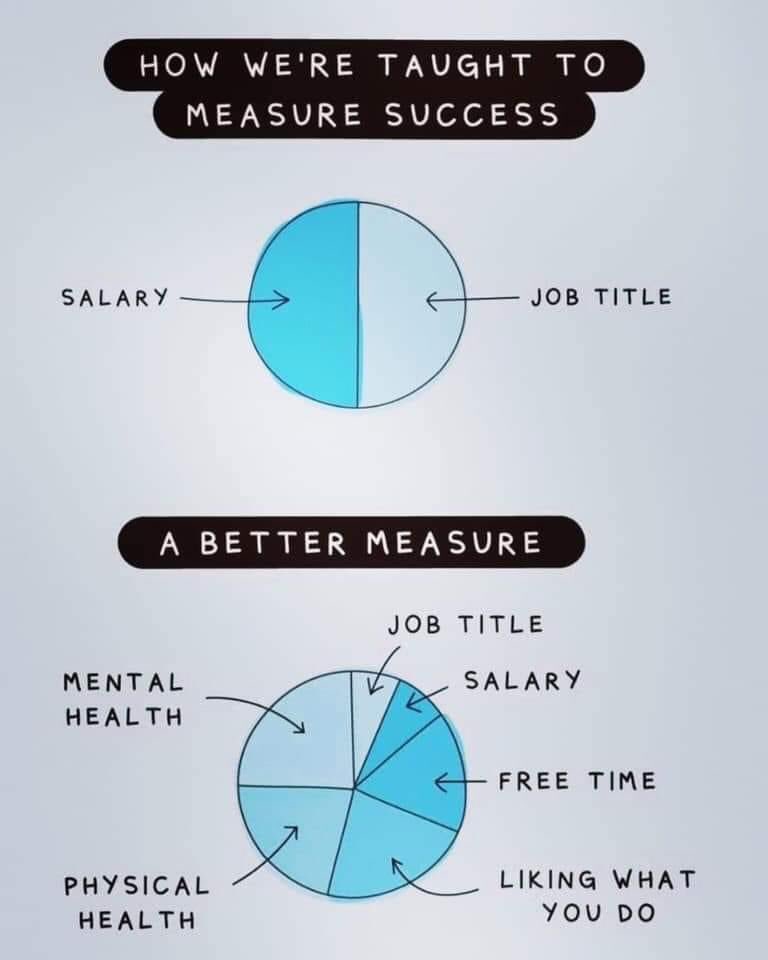
I saw this image on social media and thought it deserved a feature in this blog. Have a look at all of it and then we’ll discuss a bit further

So what does success look like for you? Or maybe I should ask what you’ve been told that success should be for you.

If this last year has taught us anything, it’s that there is more to life than just work. Many people have realised that they’ve neglected the most important things in life so that they can climb the career ladder and have suffered as a result. Now let me stress here that there is nothing wrong with climbing that career ladder. If that’s for you then you go for it (please remember us when you’re successful!) But even when doing that, it is important – I’d even say crucial – to make sure you look after yourself on that journey. And by “yourself”, as the chart above shows, I mean your physical AND mental health.

Before I carry on, have a watch of the short video below in which some people are asked how they would define success:

Surprised by some of the comments there? What was the standout? I can’t help be reminded of the guy who wanted the most likes on Instagram and wonder what kind of success that is! But really, the person who stood out was the man who said coming home from work to see the smiles on his families faces was his measure of success. I love love love that! He felt good about his work and even more happy when he was with his family. I’d say that’s a perfect balance – wouldn’t you?

So how do we get this for ourselves? Let’s go back to the image we started with, and to help, I’ve guestimated the percentages for each section:

  • 10% Job Title
  • 10% Salary
  • 15% Free Time
  • 20% Liking what you do
  • 20% Physical Health
  • 25% Mental Health

So whether you learn better from a picture or from numbers and words, this seems to make it clear doesn’t it? First and foremost, focus on your mental health. The salary and job title are the least important things. Within that mental health section will be having good support networks around you whether that be family or friends. Surround yourself – online as well as offline – with people who can bring genuine support and positivity. Keep yourself as active as possible within your own capabilities and obviously just now, within allowed limits. And notice this – liking what you do is as important as the job title and salary put together. Also, having free time is not far behind liking what you do. Down time. Switching off. These are so important to help both your mental and physical health.

Now let me say something here before those who know me well start having a go. This blog falls very much into the territory of ‘do as I say not as I do’! I’m really good at talking about the theory of things like this but not always so good at putting them into practice. If I’m honest, right now I’m doing well with the ‘liking what you do’ bit and I certainly don’t care too much about the salary. My mental health is mostly okay, and physically – well let’s move on!

So, shall we work on this together? As community, can we agree to help each other with this quest to redefine success. It’s not dumbing down success. It’s making it more real, more sustainable, more enjoyable, more successful!

As always, if you want to make any suggestions, or just chat anything through, give me a shout. communitycoach@tamfourhilltro.co.uk or 07444 873151.

Finally, remember to keep Monday 26 April, 6:30-8pm, free in your diaries. All will be revealed soon!