Part of my role as Community Coach is to bring various training to you both as individuals and organisations. But what training would you like to have? What skills do you think you would like to develop? What learning have you always wanted to develop but never had the opportunity? What gaps are there in your knowledge? Practical, educational, skills-based – right now the list is pretty much endless of what could be delivered. But it needs to be what you actually want! So, to give a helpful steer to my planning, please select as many of the following options as appropriate to you. It’s completely anonymous, but if there’s anything you can think of that’s not in the list (and I’m sure you can), please let me know and we’ll see what we can do. To start with we will need to run some courses online, but ideally we’ll get you back together in a room – remember how we used to be able to do that! Thanks for helping shape the support that is actually needed in this area.
For my blog this week, I’m mainly speaking to those of you out there who have an interest in gardening, although the rest of you can read on as well if you wish!
My colleague John is gaining good traction in community litter picking as part of the campaign to Keep Camelon and Tamfourhill Tidy Clean and Green. His blog on Tuesday highlighted one group of litter pickers, and we’ve seen and heard of other such groups or individuals cropping up around the area too. This is great as people are taking a pride in their area.
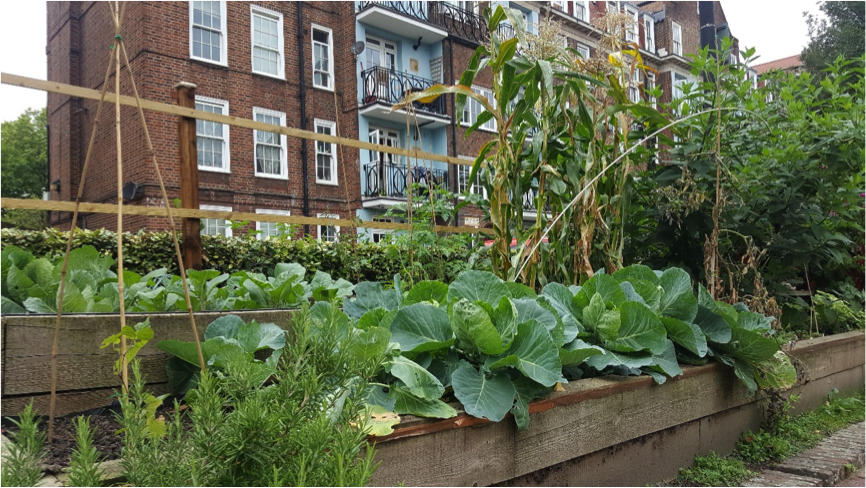
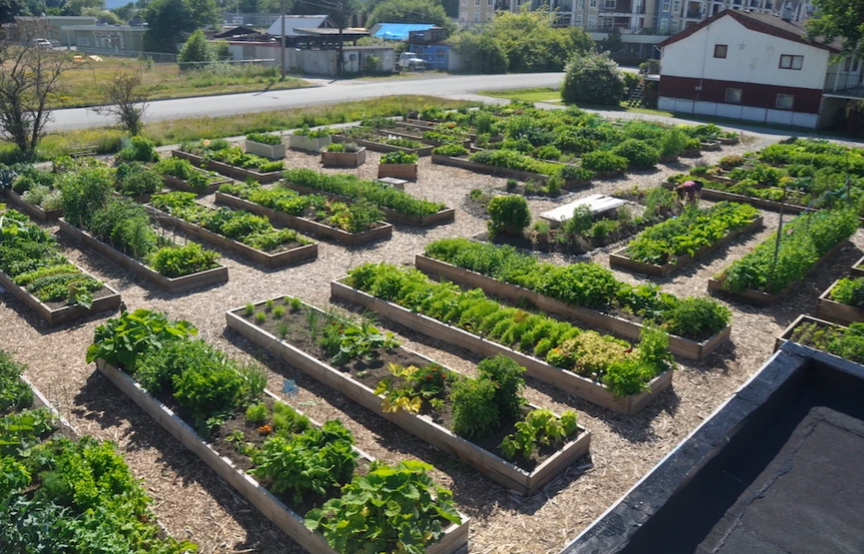
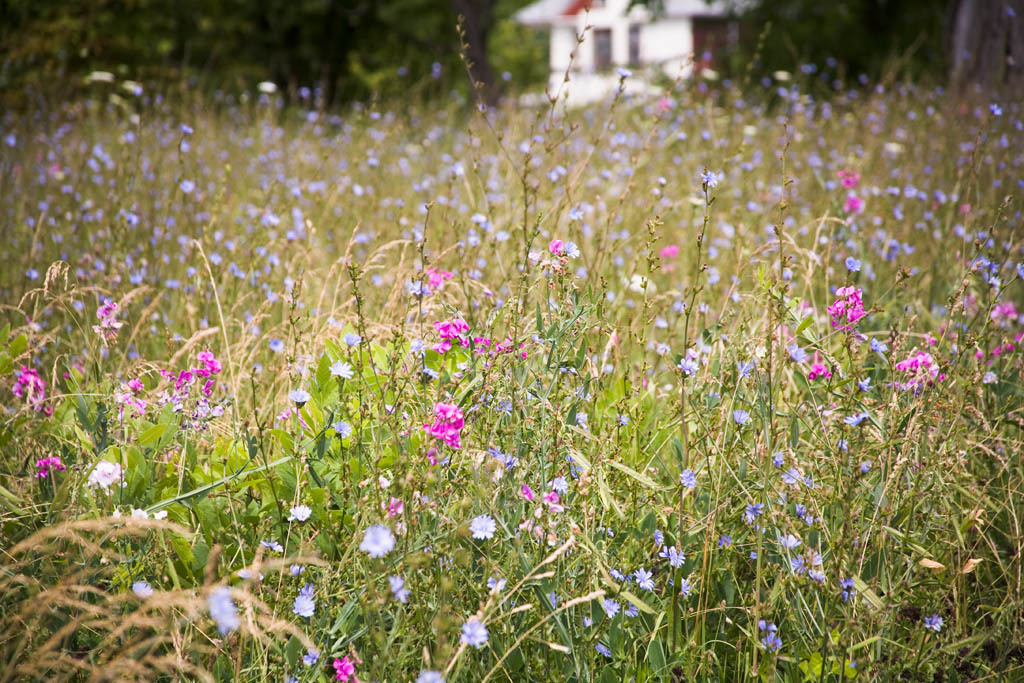
On the back of that activity, we now wish to look at how we can turn some local sites – either local litter hotspots or just unused areas – into something beautiful. We can do this by undertaking community gardening that may be as simple as “seed bombing” or spreading some wildflower seeds, but could be as involved as growing food that could ultimately benefit local food pantry’s as well. We may just develop a very small area, or work on a larger plot over a longer period of time. Basically, the opportunities are endless and hopefully will give a fresh outlet for all those of you who developed green fingers during lockdown in your own garden or balcony, or took part in the ‘veg on a ledge’ scheme, as well as those for whom this kind of thing is second nature.
We have identified a few possible sites and have opened discussions with Falkirk Council and also the local Community Food Consortium to ensure we do things right but also feed into local planning, support and maybe even some funding.
So if this is of interest to you, please take 2 minutes of your time to complete the information on the link below. I’ll then set up a meeting for those who are interested to discuss options. Due to current restrictions this will be an online meeting, but if you know of anyone who is not online who may be interested, please let them know and help them keep informed until we can actually physically get together again.
We’ll aim to start this as simply as possible by allowing you to do what you want to do – gardening! In time, this may evolve into a formal organisation but not until we have the right skills around. All that will come in time. For now, lets focus on the plants! I look forward to supporting you in making this happen. Any questions, comments, suggestions or need for help – give me a shout.
I finished last week’s blog with these five words about community: Connection, Participation, Nature, Fairness, and Dignity. These are core elements in a positive, united community. When those five things work in perfect harmony, you have a community that has a strong sense of wellbeing which counts for a huge amount.
During the recent lockdown, communities the length and breadth of the country stepped up to support each other. Its what communities do in a crisis – they rally round to support each other often because it is seen as the only way that things will happen. In reality, communities will support each other through good or bad, but still for that same underlying basis of necessity. Communities will always be looking out for each other no matter what is going on. So, whilst I will never get political in these blogs, it was disappointing to say the least to hear a UK Government official say they were ‘amazed’ at the way communities had responded to the recent pandemic. Amazed? Supporting one another is the bread and butter of every community no matter what policies or choices are thrown at them. Simply, it is what we do.
People who like to put a label on things have begun to refer to this as a Wellbeing Economy. I’m not really one for labels but this kind of works. Looking after each others wellbeing is the ‘currency’ of community but often gets lost or disrupted due to policy and practice. It is unfortunate that so often, people get in the way of people helping people. Lets pause and have a look at this short video:
The Covid-19 pandemic and wealth of community support that followed, are testament to the strength of community. We know our communities are really strong and you just have to read local social media pages to see how people will look out for others and how one act of kindness can lead to so much more. What the response to the pandemic did was fast track a lot of support and bring out this community led action – this wellbeing economy. To be honest though, it simply accelerated a change that was already occurring. And the reason it works is because communities understand their own needs and that understanding makes us better equipped to meet those needs. So what works in Camelon and Tamfourhill will be different to what works on the other side of town. The way support happens may change but the desire never does – we want the best for our community.
A revolutionary moment in the worlds history is a time for revolutions not for patching.
William Beveridge, Social Reformer, 1942
So as some kind of new normality begins to emerge, this is a perfect chance to look at our community, ourselves, and those around us. It’s a perfect chance for organisations to show what they’re made of and maybe even for some new organisations formed by local people to rise up. This is the foundation for my work. It is not ‘business as usual’ as some might think because they’ll simply default to what they previously knew or who they previously were. There is a school of thought that perhaps normal was the problem in the first place! Countless alternatives exist and it is totally within our power to design things differently. Our new community economy should be wholly based on human and environmental wellbeing. And that means giving you the opportunity to develop new skills and opportunities to better yourself and those around you. It is crucial to remember that you or the organisation you represent are always evolving and developing and that you totally have the right and the ability to improve your life.
Beware of going back to what you once were, when [you can] be something that you have never been.
Oswald Chambers
Not everyone needs to do everything, but everyone needs to do something
Mark Crosby
So what skills and opportunities are you craving? What has caught your attention over these last 5 months? Why not get in touch with me for a chat and we can see how those dreams can become a reality.
Apologies – those may be swear words to some people! To others, you may not even know what some of them are. And then there will be some of you who absolutely get these words, understand the need behind them, and will engage in their outworking.
The joy and challenge of my role is that all of those responses are completely fine! This makes for interesting times but it’s part of what I enjoy about this role. You don’t need me to tell you that Camelon and Tamfourhill is a diverse area. You just need to take a short walk around to see the differences in areas and people, often just within a stones throw of each other. So, how do we deal with this – and I do mean ‘we’!
When we plant a rose seed in the earth, we notice that it is small, but we do not criticise it as rootless and stemless. We treat it as a seed giving it the water and nourishment required of a seed. When it first shoots up out of the earth, we don’t condemn it as immature and underdeveloped; nor do we criticise the buds for not being open when they appear. We stand in wonder at the process taking place and give the plant the care it needs at each stage of its development.
Timothy Gallway, The Inner Game of Tennis
I completely understand that people want to get involved at different levels. Some of you will have no problem joining in with an activity or event and would be happy to ‘get your hands dirty’ with whatever is going on. However, you would run a mile if you were asked to be on an organising committee or do some paperwork linked to that activity. That is perfectly okay. We need all sorts of people to get involved. Leaders, helpers, organisers, planners, supporters etc. Just like the rose in the quote above, all are needed and all are welcome. (I wrote more on this in one of my earlier blogs back in July)
So when I’m helping form a new group or developing an existing one, the biggest potential difficulty comes when you assemble people from different walks of life. When they gather for the first time and don’t necessarily know each other, there will be feelings of uncertainty about each others motives and this usually leads to a hesitance to make strong commitments right away. Some may be a bit puzzled about the purpose and goals of the group. Others may not be sure whether they will have anything in common with the other members and might be reluctant to even find out.
To get going, the group needs to understand and/or shape their purposes and tasks in ways that make sense to them and are meaningful. As the members express what will undoubtedly be differing viewpoints, some areas of conflict may occur. There may also be some ill-feelings toward the person taking the lead if they are not seen as being fair or are siding more with one side or another. Whilst I’m here to enable people to have the skills to take on responsibility, I’m aware that the ‘lead’ person initially might be me. Rest assured I will always be impartial, fair and focused on the tasks at hand but am prepared to handle ill-feelings should they come my way! I’m also here to mediate if needed.
It is essential in any group that all perspectives are given serious consideration, and that efforts are made to accommodate the differences. If this is not easily achieved, the best thing to do is go back to the vision, mission and goals of the group. (Another previous blog talks more about this). If it then remains clear that not all members share the same basic vision and sense of mission, it may actually be better to split into smaller groups who can lead on different activities. In other words, rather than trying to dilute what you’re doing or waste time trying to work on differences in priorities, enabling two groups to work side by side on different projects can reduce the tensions and potentially enable even more people to get involved.
Bringing about large scale change is difficult and is achieved through relationships, championships, legitimacy, purpose, passion and patience.
Anon
Having successfully resolved any disagreements, the group will hopefully have a sense of togetherness with members being accepting of each other. In this situation, members should be able to make a stronger, perhaps longer term commitment to the group and would hopefully also be willing to take on greater responsibilities. I’ll be there to support and train them as appropriate and support for as long as it takes. The result is that decision-making is easier and more effective with all group members empowered to focus on the vision, mission and goals. This all leads to the group developing a strong identity because they are much more than just a collection of individuals now.
That’s the plan anyway!
I could write loads more on this but I’ll save that for another blog or better still when I’m actually working with groups directly. For now though, I’ll leave you with these 5 core elements that apply to forming or developing any group and really, for any effective community to thrive:
Connection (We all need a sense of belonging)
Participation (We all need to be engaged in some kind of community)
Nature (We all need a safe natural world to live in)
Fairness (We all need to see justice in all its dimensions)
Dignity (We all need enough to live in comfort, safety and happiness)
If you want help forming, fixing or developing a group in the Camelon and Tamfourhill area, please do not hesitate to email me on communitycoach@tamfourhilltro.co.uk or call 07444 873151. Until next time…. Dan.
There has been a lot of talk about exam results over the last week or so. You or your child may have been one of those affected this year – either positively or negatively. Whatever the situation, this is not the place to get into the rights or wrongs of what has happened.
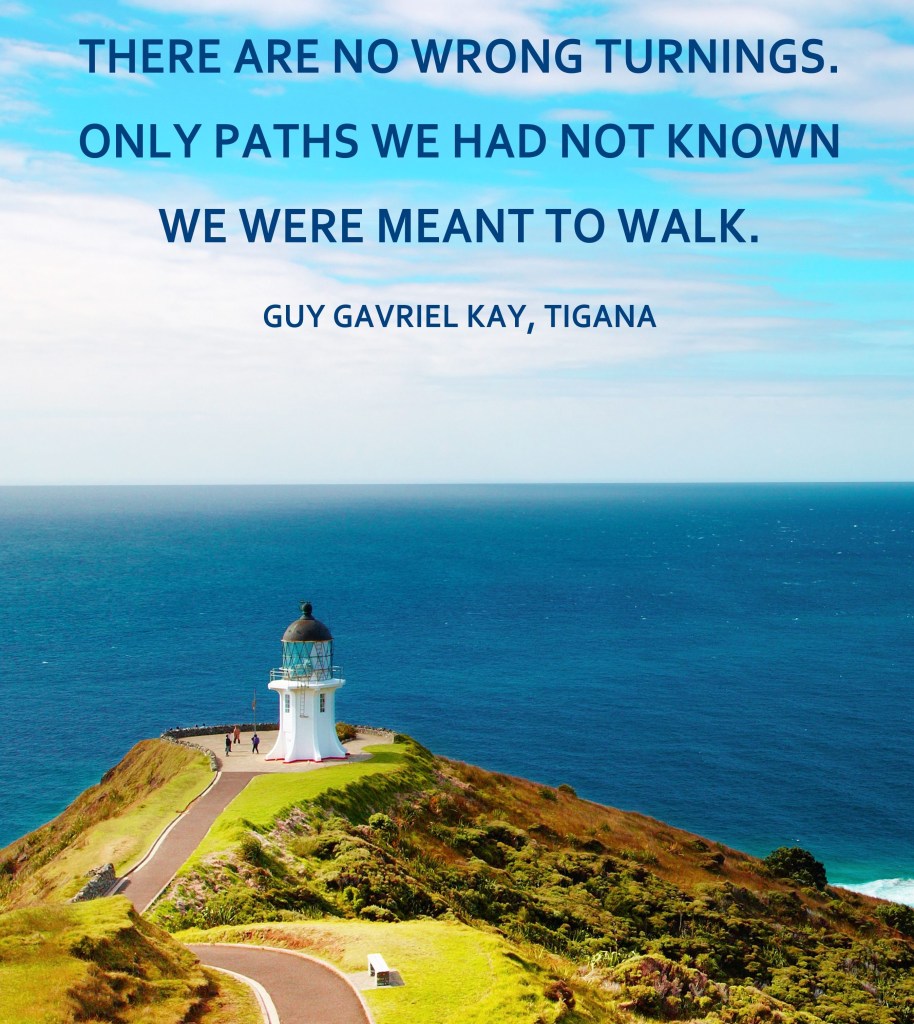
Personally, I was rubbish at exams! I am originally from well south of the border, and was the second cohort to take on the GCSE’s which had a bit more coursework that counted to the final result, but was still quite exam heavy at the time. But what I have learned over the years is that as important as our time at school and those exam results are, they do not necessarily close any doors to a positive future. We should all make the most of any learning and development opportunities that come our way throughout our lives, especially at school but through our later years too. But we should also never think that we’re stuck on a particular path if it isn’t working out how we hoped. That’s also kind of been the theme of our #MondayMotivation images that we’ve been sharing each week.
Over the last couple of years, the social media hashtag #nowrongpath has grown momentum. This is when people share their journey to where they are now and prove the point that where you start out isn’t always where you end up. For some, they know where they want to go from an early age and make every effort to get there. But many others start out on a direction and either find it wasn’t for them or that life has opened their eyes to other opportunities. So, for this week’s blog, I thought it might be helpful to share my journey to where I am now, that will hopefully serve as encouragement for those who think they may be stuck or not sure where to go or what to do.
Left school with 3 GCSE’s;
Took and passed a 1 year Construction Course at college – planning on being an architect;
Re-sat 2 GCSE’s and passed 1;
Switched plan and started a 2 year Business and Finance Course;
Got offered, and accepted a job after the first year work experience placement on that course and began working in finance for the NHS;
After 3 years, I was made redundant and spent a short time working as a Kitchen Porter – doing the dishes in the staff canteen of a large Pharmaceutical Company;
Eventually got a part time job in finance at a University Student Union;
Also got another part time job at a Christian Bookshop which later became a full time job;
After another 3 years, I returned to finance to become a Regional Finance Assistant for a large Christian Charity;
Left 3 years later to go to Bible College;
15 months later I moved to Scotland with my now wife;
Spent 4 months working as a Chef in a busy Restaurant;
Spent 18 months as Assistant Cafe Manager for a Charity run Community Cafe;
Was then involved in setting up a Charity run Furniture Re-Use Project and managed this for 6 years;
Spent 2.5 years as Managing Director of a Furniture ReUse and Community Support Charity;
Left to take on 2 Development Roles – one for a Community Development Trust to move them closer to having a Community and Sports facility, and the other for a large Christian Charity setting up Charity Shops and Furniture Projects;
Also established a consultancy business, helping people to turn their Ideas to Enterprise;
After just over 3 years, I left to work in a full time Development Role to convert a former Church to a Community Facility;
Just over 4 years later, I am now in this Community Coach role.
I started with some wild idea to be an architect, discovered I was better at finance stuff, did a bit of catering, then got involved in charity enterprise activities, learning about development and Social Enterprise as a result, discovered a passion for “Developing Projects that enable People and Communities to be Developed”, and ended up in what for me as I am just now, is the perfect role. I guarantee this would not have been the journey a careers person at my school would have set out or even been aware of the end destination. It’s not exactly a linear path!
So, whatever stage of life you are at, or if you’re trying to encourage a child of yours along the way, be encouraged that there is no wrong path on the journey of life. And if you have a passion for something burning inside you and either don’t think you could achieve it or haven’t got a clue where to start, then I would love to help you. Please get in touch and let’s see if together, we can get you on your next right path.
Clever people tell me of the ancient Greek word “enthos” which means “from within”. Literally, it has religious connotations, but from this ancient word we get todays word enthusiasm. So what is your ‘enthos’? What enthuses you? What gets you out of bed in the morning? Is it money? A necessity? Or a passion to do, be or create something? Or maybe you don’t know what to do with this dream inside you. Maybe you have an idea, a passion, a goal that is burning within you and you don’t know what to do with it. Maybe life – those around you – your own mind – is telling you that you can’t do anything with it.
Everyone has a different ‘enthos’. And everyone has a right to bring that to a reality yet so many miss out because they never took that first step. Or worse, that someone stopped them taking that first step. If you’re enthusiastic about something, now is the time to put things into action.
I should add at this point that there are those who don’t like the word enthusiasm or enthusiast. They change it for ‘fanatic’ or say the person is literally ‘possessed’ by the topic or activity in question. Okay, that may be a very literal translation of the word but we are not going anywhere near that kind of description – it is not helpful and stops some people with a genuine enthusiasm for something from actually going through with it.
It is said that the wealthiest place on the planet is a graveyard, because of all the ideas, dreams and passions that lay unfulfilled. That enthusiasm someone had for something but never went through with it for various reasons. That idea to create something that never came through because someone told them it would never work. That passion to develop a local activity that never got off the ground because of lack of support.
Let’s not allow this kind of history to repeat itself. Whatever it is that is burning within you, we’d love to chat with you about it. We can help you work through the processes you’d need to go through to make it a reality. Through our direct support, and signposting you to the support of others, your ‘enthos’ can come out from within your mind and become a reality.
In closing, have a watch of this short video that asks what drives you. It uses a lot of sporting imagery but take note of the dialogue. Now is your time.
Welcome to my latest Community Coaching blog. It’s been encouraging to receive some interaction from these posts – it’s good to know at least some people are reading them and finding them helpful!
The text on this week’s Monday Motivation graphic said “Focus on doing right thing for the right reason and don’t buy into the lie that it can’t be done”. This got me thinking – and so the theme for this week’s blog was born!
It’s so easy to listen to others who try to put you down and tell you it can’t be done. As a result, you could potentially miss out on a great opportunity for yourself. It’s also easy to listen to the voice in your head saying you’ll never be able to do something. Your surroundings can also affect your way of thinking. Okay, statistically Camelon and Tamfourhill is an area of deprivation. So what! You are still you and deserve the opportunity to reach your fullest potential. Just because others around you, even your friends and family, have chosen not to pursue a dream, does not mean that you have to go down that path too. The Camelon and Tamfourhill area is full of assets – and you are one of them.
We could leave this blog right there! Be encouraged to be the person you were made to be. But if you’ve got the time, please stick with me for a few more minutes as we look a bit deeper at this.
Whether you’ll be able to achieve what you want or not, is partly down to how your brain is geared – what your mindset is. In short, do you have a fixed, or a growth, mindset? It’s relatively obvious which mindset is better but here’s a little further analysis:
Fixed Mindset
Growth Mindset
A belief that intelligence, skills and talents are fixed – “I’m not good at this now, and never will be.”
A belief that intelligence, skills and talents can be developed – “My skills have come a long way, and I know they can be better with some guidance.”
A focus on outcomes or targets rather than progress – “I’ve failed completely. I missed my sales target by 10%” (ignoring your much improved sales pitch).
Everything is a learning opportunity – “This is going to be a challenge, but I’ll break it down and tackle a bit at a time.”
Talking yourself down, feeling threatened by others or giving up in the face of setbacks or failures – “Clearly all this feedback means I’m no good at writing. I’ll ask someone else to do it next time.”
When you fail or suffer a setback, you believe you just can’t do it yet – “I can see now that the way I set this up wasn’t quite right, so I’ll take an alternative approach next time.”
Now if you find yourself in one particular column, don’t presume that you will stay there. We all shift between a fixed and growth mindset, depending on our situation. Someone coming at a completely new task or role might be prepared to learn, and expect some setbacks as they go through that process. They have a growth mindset. On the other side, in promoting someone who has used a growth mindset to learn and progress, this might mean they now see themselves as an expert with little more to learn. Suddenly, they have a fixed mindset.
I like to consider myself as someone with a growth mindset and as such I can recognise this problem. In previous development roles, I have recognised a point where you can actually create so much growth that you end up being in danger of creating something or someone that is unmanageable. But you still need people that are at least willing to learn or change – as the need arises. People that are so fixed in their ways – the ‘aye been brigade’ – need to be shown a better way and often that happens best by ignoring their criticism and committing to your own growth. Actions – and results – speak much louder. Their attitude is the enemy of progress, encouraging us to cling to what we know even when it falls so far short of our expectations and potential. It has been described as a self-imposed straight-jacket disguised as a safety net that in short, simply restricts and fails others. Use your determination to grow to show them a better way.
Our brain’s structure is not fixed. It constantly changes in response to our external and internal experiences, and we can choose to make use of this to improve our skills and intelligence. By adopting a growth mindset, we decide to use a range of strategies to tackle tasks or challenges, and find learning opportunities in mistakes, setbacks and failures. Confidence and resilience are the consequences of a growth mindset. Developing a growth mindset is a journey of self-awareness and of conscious learning. It takes time and practice, so set your expectations accordingly, and regularly take some time to reflect on the results.
Let’s recap with the help of this short video:
In time, we’ll be developing some training courses that will help you with this and other personal and organisational development topics. For now though, we have this blog and the chance for me to engage directly with you to help you grow. If you want to know more or simply want to chat through an idea, then please get in touch.
Over the years that I’ve had the pleasure of working with community based activities, projects, organisations or enterprises, one thing always stands out for me. Those who know why they are doing whatever it is they are doing, survive longer and better than those who just focus on what they are doing.
This is not just something to put in a funding application form, but something that defines you as an organisation. It will help local people understand why they should get involved. If you’re trading, it could make the difference between someone choosing to buy from your socially benefiting enterprise, or a standard company up the road. If you’re fundraising, it could make the difference between a donors money coming to you or something else.
I’m sure you all know what you do: you hire rooms out; you run a sports activity; you coordinate events; you run a music group; etc etc.
You also probably know how its done: you have a price list and people book in; you have coaches, equipment, and training sessions; you book entertainment and advertise; you have instruments, rehearsals, tutors; etc etc
But the key to success is why you do it: to provide facilities and activities for the betterment of the local community; to improve health, fitness and wellbeing; to celebrate local identity and success; to encourage the development of talent; etc etc
So what is your starting point? Why, how, or what? Author and motivational speaker Simon Sinek writes in his book “Start with Why” about what he calls the “Golden Circle”.
This is one of the most simplistic but powerful ways of looking at what it is that you do – or wish to do. We can so easily get bogged down in ideas, processes, procedures etc that we can forget what is at the heart of our mission. Sinek explains further:
“When most organisations or people think, act or communicate they do so from the outside in, from WHAT to WHY. And for good reason — they go from clearest thing to the fuzziest thing. We say WHAT we do, we sometimes say HOW we do it, but we rarely say WHY we do WHAT we do.” “When communicating from the inside out, however, the WHY is offered as the reason to buy and the WHATs serve as the tangible proof of that belief.”
Simon Sinek: “Start with Why”
This change of thinking could really make the difference for you and your activity / organisation. Before I say more, let’s hear from the Simon Sinek himself in this short TED talk:
In my last development role, I produced a marketing booklet entitled What we do and Why we do it. It was pretty evident what the place did, but not everyone fully understood why. Producing that booklet helped secure a major collaboration that will now be bringing increased support for people in that area. All because we highlighted the ‘why’.
It’s crucial to focus on why your organisations exists and emphasise this. Anything you do (what) and the process to make it happen (how) will fall into place if the why is solid. This is true for any activity, organisation or business but especially so when it is for community benefit. It will give your followers, service users or customers a way to identify with you on a personal level. If your ‘why’ matches their ‘why’, they will be willing to stand with you through thick and thin. Without a clear ‘why’, people default to the ‘what’. Then you are caught in the struggle to stand out in the ever growing sea of ‘what’ and are forced to differentiate yourself with features, or worse, with price. The end result is your reason for being – your ‘why’ – is lost.
Let’s take a hall or meeting space as an example – its easy for me as I’ve run one! You know how big it is, how many people it can hold and the kind of activities you’d be happy to see within it. You know how much it costs to run the hall (light, heat etc) and any staffing costs, so you can work out a rental price. If you stop there, you are just the same as any hall or meeting space and people will choose on location, availability or price – the ‘what’ and ‘how’. However, if you decide to run some activities yourself, or support a group to use the space for less than advertised rates, in order to provide something of direct benefit to the community, you can use this as a reason for other groups or companies renting your space – the ‘why’. “Use our space and we’ll use surplus funds to run this other activity for community benefit” or “have your meeting here and we’ll be able to allow a community benefit activity to use the space at a reduced price or for free”. See the difference? Suddenly there’s a reason for people to use your service – the ‘why’ has come to the fore and in this scenario, your ‘how’ (processes) and ‘what’ (activities) have become consistent with your ‘why’ (beliefs). And that’s the key as all three work together in harmony. To do that, you need to ensure the clarity of why, the discipline of how, and the consistency of what.
Remember that “People don’t buy WHAT you do; they buy WHY you do it.” The most effective leaders always win the heart first, and then the mind. And the only chance you have to win the heart is if you start with WHY.
Simon Sinek: “Start with Why”
I’ll leave you with a terribly misquoted song lyric that might help you remember this Golden Circle that we’ve looked at today: “It ain’t what you do its WHY YOU DO IT”. Until next week…….
Hi. Welcome to my second Community Coach blog. This week, to further highlight why my role exists, I’m going to talk about how I can help you or your organisation to make a positive difference in the area. Before I say more, please take 3 minutes to watch this TED talk from musician and entrepreneur, Derek Sivers.
I love this video because it shows how simple it can be to get a group of people together to work towards a common goal. Okay, the people in this video are just dancing on a hillside (nothing wrong in that of course!) but as the speaker points out, it teaches us some important lessons about how groups of people work. This can really help us as we look to bring more positive change to Camelon and Tamfourhill. So, which type of person described in the video are you? Or which would you like to be but don’t know where to start? Let’s explore further.
Leader The person running the group or cause – the maverick – the lone nut – the one with the vision – the one who can’t sit back and do nothing – the one who’s often frustrated at the lack of action – the one needing others to get involved but not knowing where to find them.
Is this you? Are you running something that’s going pretty well but needs a fresh injection of life? Are you plodding away with something that’s been going a while but just seem to go over the same ground all the time? Are you trying to get something started but can’t get others to join you? Or do you simply have a dream of something that could be, but don’t know where to start?
How can I help you to make your dream a reality? What do you need? People – funding – general guidance – a venue – visibility – training? I can help you with all of this so just get in touch.
First Follower Often just one person joining in on the journey can make life easier. Are you that person? You saw in the video how just one person joining in slowly started a flood of helpers. Is there a cause that you want to get involved with and you’ve either seen/heard of someone wanting to do something about it but don’t know how to make the first move? Or are you passionate about something like the leader above, but would rather not be the one to lead it? Maybe you want to be that first follower but don’t think you’ve got the necessary skills or abilities to do so. I can help! You may be the key that unlocks the potential of someone’s dream!
The Crowd Are you waiting for the momentum to get going on something before you jump on board? Will you jump once you’ve seen positive results? That’s all fair enough but you need to be ready to jump at some point! What do you need to help you do that? Self-confidence – skills based training – more information – networking skills – signposting? Again, I can help! Don’t be the one who sits back and just lets others jump forwards to help. The only barrier to you getting involved and being included in order to bring positive change, is you!
Why bother? Its a fair point. You may have lived here for a huge part of your life and just see the same old things happening with the same results. You may be new into the area and finding it difficult to integrate or worried even that what you suggest has been tried before and failed – but has anyone asked why it failed?! Or you may be somewhere in the middle but still don’t know what to do, where to go, or even why to do it.
As people, we are made to live and work with others in a positive community where we can thrive. We are social beings that have evolved to exist within communities. American politician Paul Ryan said “every successful individual knows that his or her achievement depends on a community of persons working together.” To grow and develop, we need to create a working team around us that is not necessarily all in agreement all the time, but that will work together for a common goal. Stephanie Caldow says in her article ’10 Traits That Make a Good Community’ that: “Involvement in a positive and encouraging community has a tangible impact on individual self-awareness and fulfilment. Positive experiences with communities allow individuals to feel more connected to their environment and the people in it. This form of connection also provides a support system for people when they are in need of encouragement or sympathy. Strong feelings of connection to the group also work to combat any mental illness that can arise from alienation in the form of anxiety and depression. Positive community experiences provide members with a sense of belonging and the feeling of being able to express themselves without feeling judged. Communities that excel at promoting this feeling of belonging encourage members to speak up about their ideas and opinions, which, in turn, leads to members considering their positions from a deeper perspective.” *
I see so much great stuff that is being done already but there is still so much more that can be done. Some ideas start well and then fall down very quickly or just drag along – often because people don’t get involved, but also because people do get involved and are not fully embraced or included by the leaders or even by the first followers, so they drift away again. Let’s work together to continue making Camelon and Tamfourhill a thriving, positive and encouraging community for all people that live here and not just those that are visible.
Summary I’ll leave you with some quotes from the video that started this piece off, but before I do, let me reiterate that I am here to coach you – to work with you. This is not like previous support activity when people do everything for you but equally you will not be left to struggle on your own. Let me work with you to support, train, encourage, guide or whatever! And so to these final words from Derek Sivers, taken from his video above:
“If you are the type [of person] that is standing alone, remember the importance of nurturing your first few followers as equals so it’s clearly about the [cause], not you.”
“Leadership is over glorified. Yes [someone has to be] first and they’ll get all the credit, but it was really the first follower that transformed the lone nut into a leader.”
“If you really care about starting [something], have the courage to follow and show others how to follow. And when you find the lone nut doing something great, have the guts to be the first one to stand up and join in.”
“Our Place” was a place-based initiative from the Big Lottery Fund (now the National Lottery Community Fund) that aimed to build stronger connections and relationships in communities, empowering local people and organisations to bring about positive and lasting changes in their neighbourhood. The Camelon/Tamfourhill area of Falkirk was one of 7 areas in Scotland and the community has been working together on this vision since 2014. Various projects were developed, funded and delivered through the scheme with £1.2m being distributed locally.
The final successful application was for the Kemlin Kin project, established to support the community to create a legacy for the work that had taken place. The project aimed to engage two development workers to lead two separate but linked workstreams, one around capacity-building to ensure that community groups in Camelon and Tamfourhill continue to flourish past the end of the Our Place programme, and one around the theme of Community Safety, which has been repeatedly highlighted as a local priority.
These two workers have now commenced in post with John Hosie taking on the role of Community Safety Engager and Dan Rous becoming the Community Coach. They are employed and managed by Tamfourhill Tenants and Residents Organisation and the organisation will work closely with a steering group made up of local people and organisations to enhance community empowerment and ensure local people have a voice within the local area.
Quote from John
My Post will ensure that Community Safety is put firmly onto the local agenda and my overarching aim will be to support the development of a community led strategy. The intended outcomes will be to achieve a community that feels safe, keeps safe and one which builds mutual respect and greater community cohesion. The initial phase of this project will be concerned with highlighting and promoting both myself and my remit and to engage with an active listening exercise, where the local community will be supported and encouraged to share their experiences and views about Community Safety. Priorities require to be identified and agreed, which are relevant and appropriate to all interests within the community. This approach will necessitate implementing a multi-faceted approach and a consultation process that is inclusive and dynamic.
Quote from Dan
My post will ensure that people working with or for the communities of Camelon and Tamfourhill can be supported, developed and encouraged to make them stronger and resilient for the future. I will be providing training and support for things that will help them in their roles, including how and where to access funding, operational issues, property matters, marketing, development and much more. It’s an interesting time to start a new role but I will be using this time of lockdown to collate peoples needs and develop a programme of support that will be both individual and collective. Through this project we aim to ensure that all local support will continue and grow in the future as well as encouraging new activities to take place as well. This is a great area with so much potential and I am eager to do my part to harness and develop the potential within.
Quote from Tamfourhill Tenants and Residents Organisation
The Tamfourhill tenants and residents are delighted to be managing this project within our local area. The project was a long time in the development with a number of hurdles to overcome before the project could get off the ground. We are excited to be in the next steps of the project and look forward to the final piece of the jigsaw which is to provide a capacity building support project within the area that will support local people to have more of a say in the delivery of future project activity and empower local people to be active in community safety projects.
Press Release Notes
Tamfourhill Tenants and Residents Organisation is a Scottish Registered Charity SC049783. They are a group of local people who work together to represent the views of all tenants and homeowners within the area and help make the are they live in a better place. They work in partnership with other community and statutory organisations to help create positive change within the local area.
More information is available from Shona Craig/Lynne Boslem at ttra@live.co.uk
His background has been in detached youth work and community development work and he has been involved with supporting a wide array of local community-based Projects and initiatives. The essential features have been to facilitate local ownership and empowerment and to ensure these projects have been developed in accordance with local people’s aspirations and vision. John is new to this area and arrives with an open mind, a blank canvas, and an enthusiasm to have a positive and effective impact upon the local community.
His background is in Social Enterprise and Community Development and he specialises in developing projects that enable people and communities to be developed. He has worked with numerous projects across Scotland for the last 17 years and has gathered a wide range of support and contacts to bring to the area to help people reach their potential. Dan lives in the area but knows he still has much to find out about everything that is happening so that collectively the area can be made even better than it is.






 Safer Communities Youth Action Project